Why Tiny Red Bugs Suddenly Appear Around Your Windows
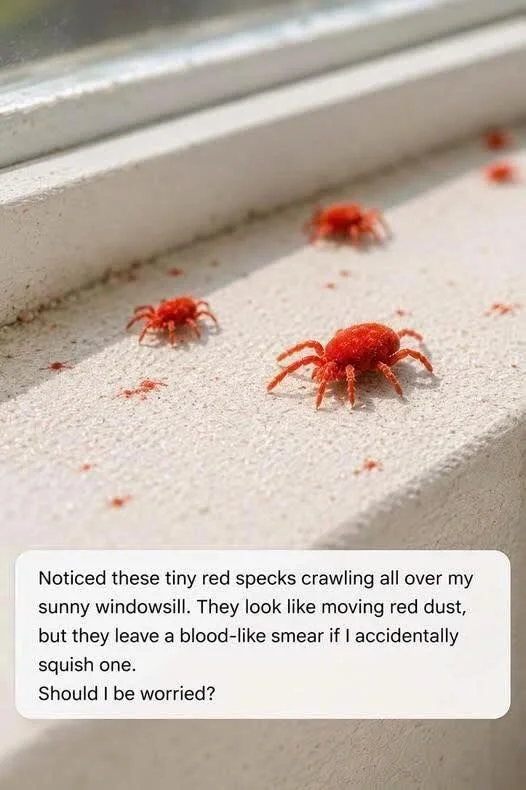
Spotting tiny red specks crawling across a sunny windowsill can be surprising—and even a little unsettling at first. From a distance, they may look like scattered red dust particles, but a closer inspection reveals that they are actually tiny living creatures. Even more alarming, they often leave behind a reddish stain when crushed.
In most cases, these small pests are clover mites, a common but largely harmless household nuisance.
What Are Clover Mites?
Clover mites are extremely tiny arachnids related to spiders and ticks. They are reddish-brown in colour and often appear in large groups around windows, exterior walls, patios, and home siding.
One of their most distinctive features is their unusually long front legs, which many people mistake for antennae.
These mites are most active during the spring and fall, especially when outdoor populations increase rapidly due to mild temperatures and favourable conditions.
Why They Gather Around Sunny Windows
Clover mites are strongly attracted to warmth and sunlight. This is why they commonly gather near south-facing and west-facing windows where sunlight is most intense throughout the day.
Homes surrounded by grass, gardens, shrubs, or thick vegetation are especially attractive to them because clover mites feed on plant material and lawn grasses outdoors.
As temperatures change, they may begin searching for warm surfaces and accidentally enter homes through tiny cracks and openings.
Are Clover Mites Dangerous?
Fortunately, clover mites are harmless to humans and pets.
They do not bite, sting, spread diseases, or damage household furniture, fabrics, or food. Their biggest drawback is simply the frustration caused by their large numbers and the stains they leave behind if crushed.
Although they can become annoying, they are considered more of a nuisance pest than a serious infestation threat.
Why They Leave Red Stains
Many people assume the red marks left behind are blood, but that is not actually the case.
The reddish smear comes from natural pigments found inside the mites’ bodies. Unfortunately, these stains can sometimes be difficult to remove from walls, curtains, carpets, and windowsills if the mites are crushed directly.
For this reason, experts recommend avoiding squashing them whenever possible.
The Best Way to Remove Them Indoors
The safest and easiest method for removing clover mites indoors is to vacuum them rather than crush them.
Using a vacuum helps eliminate the mites without spreading stains across surfaces. After vacuuming, it is best to empty the vacuum bag or container promptly.
You can also reduce indoor activity by sealing small cracks and gaps around:
- Windows
- Doors
- Foundations
- Air vents
- Exterior siding
Blocking entry points can significantly reduce the number of mites entering the home.
How to Prevent Clover Mites From Returning
Long-term prevention usually focuses on reducing outdoor conditions that attract them.
Helpful prevention methods include:
- Keeping grass and plants trimmed away from the home’s foundation
- Removing excessive vegetation near walls
- Using gravel or mulch barriers around the house
- Sealing exterior cracks and openings
- Maintaining regular lawn care
These simple steps can help make your home less inviting to clover mites over time.
Final Thoughts
Clover mites may look alarming when they suddenly appear in large numbers, especially around bright windows and walls, but they are generally harmless pests.
While they can be annoying and messy if crushed, they do not pose health risks to humans or pets. With proper cleaning, sealing, and outdoor maintenance, most homeowners can keep clover mite problems under control fairly easily.
Sometimes, the tiny red bugs gathering on your windowsill are less dangerous than they seem—they are simply small seasonal visitors attracted by warmth and sunlight.
Disclaimer:
This article is intended for informational and educational purposes only. Pest activity and infestations may vary depending on environmental conditions and geographic location. For severe or persistent pest problems, consult a licensed pest control professional for proper identification and treatment recommendations.