As age 50 looms closer on the horizon, I’ve come to a somewhat alarming realization: I am apparently becoming my grandmother. Well, not actually my grandmother — but the stereotypical bubbe, straight ...
As age 50 looms closer on the horizon, I’ve come to a somewhat alarming realization: I am apparently becoming my grandmother. Well, not actually my grandmother — but the stereotypical bubbe, straight outta Brooklyn (or in my case, the Upper East Side via Los Angeles).
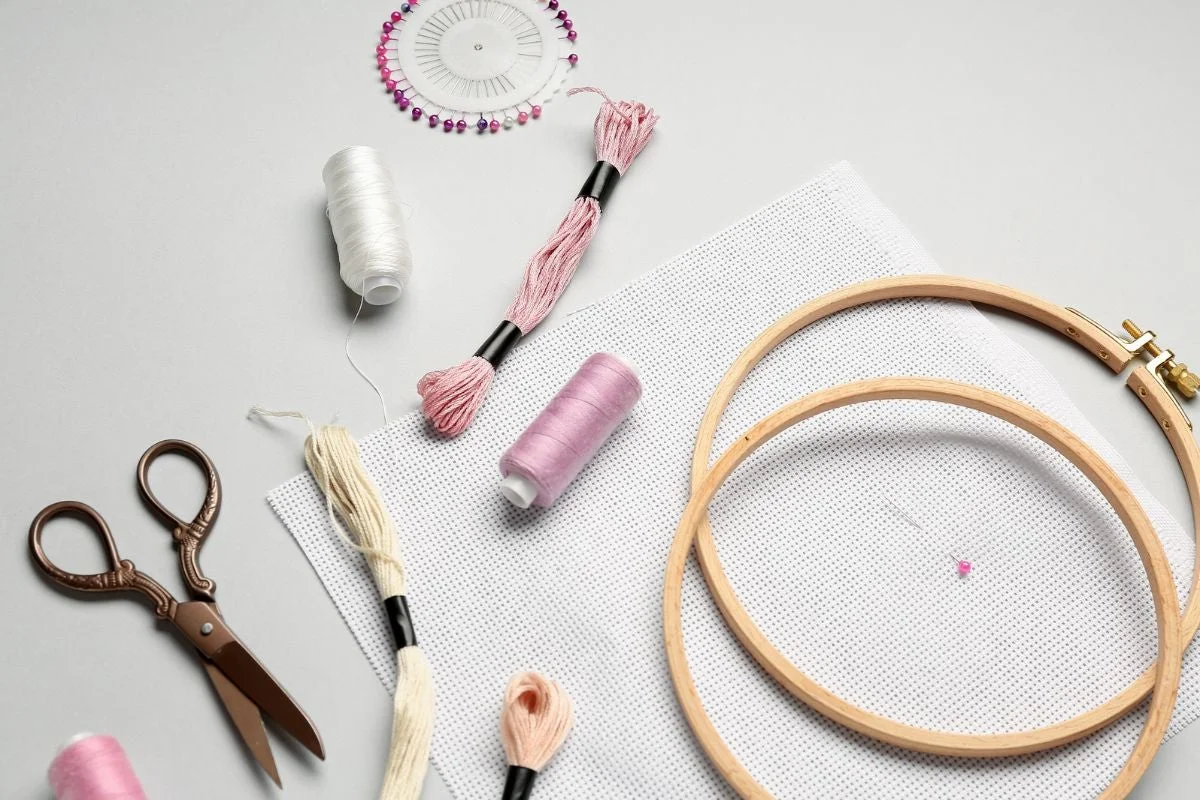
I play mah jongg. I teach mah jongg. I have strong opinions about mah jongg tiles. I’ve also become an avid needlepointer, with an ever-growing collection of canvases, an alarming investment in colorful threads and more than a few opinions about both. Somewhere along the way, my free time became devoted to what the internet has affectionately dubbed “granny hobbies.”
And I couldn’t be happier about it.
As a rabbi and a mother of two, I spend much of my life thinking about other people’s needs, schedules and experiences. My job — which I love — is to build community and connections, and like so many women, I also manage the endless logistics and mental load of family life. What I hadn’t anticipated was that these so-called granny hobbies would bring something I didn’t necessarily know I was looking for in my late 40s: new friendships, creative fulfillment and spaces where I can simply show up and enjoy myself.
I’ve begun to wonder whether our grandmothers — and the generations of women who came before — knew something we’ve been too busy to appreciate. There’s something special about gathering around a mah jongg table, something different from even a Shabbat or seder table. For generations, women have been the ones making sure those other tables are set, the meals are prepared, the traditions are passed down. But at the mah jongg table, we’re there for ourselves. The tiles give us a reason to come together, but the conversations, the laughter and the friendships are what keep us coming back.
I’ve discovered much the same thing through needlepoint. What might seem like a solitary hobby has introduced me to stitch nights, needlepoint shops, online communities and an entirely new circle of friends. Both pursuits come with their own rituals, vocabulary, traditions and learning curves… and people delighted to welcome you into their slightly obsessive worlds.
On a sunny Monday morning, at a random mah jongg meetup, I met a woman who has since become a treasured friend, confidante and my unofficial needlepoint sherpa. Thanks to stitch nights, I’ve found myself in group chats with women I might never otherwise have met, swapping ideas, sharing projects and talking about far more than needlepoint. We’ve shared our oys and our joys and found the very kind of belonging that I spend so much of my professional life trying to cultivate, which is to say, we’ve built genuine friendships.
In the book of Exodus, as the Israelites prepare to build the Mishkan, the portable sanctuary that will accompany them through the wilderness, the Torah tells us about the women who spun the fabrics for its construction. Exodus 35:25 reads: “And all the skilled women spun with their own hands, and brought what they had spun, in blue, purple, and crimson yarns, and in fine linen.”
As a feminist scholar of Torah, I have always been taken by this moment. But as I enter my “crone era,” I find myself wondering less about what they made and more about what happened while they were making it.
I imagine women gathered around their looms, talking about their children, their relationships, their worries, their lives. Laughing, complaining, offering advice, listening. I guess I imagine my friends and me at a stitch night or our weekly mah jongg game — only with fewer Trader Joe’s snacks.
Of course, the women of the Mishkan weren’t making things to pass the time. Their handiwork would become part of the sacred space where the Israelites gathered as a community. But I’ve spent enough time at mah jongg tables and stitch nights to say with confidence that we’re also making more than needlepoint canvases or winning mah jongg hands. We’re making friendships, connections and communities through the time we spend together.
So perhaps becoming a stereotypical bubbe isn’t quite the alarming development I initially thought. As it turns out, there’s a pretty long tradition of women making things — and making time for ourselves and one another.
Though I suspect the women of the Mishkan had fewer options for threads.
Making Room for More Jewish Voices. Kveller is where funny, thoughtful, and unexpected Jewish stories find readers. A few dollars helps us keep telling them.
The post I’m Turning Into a Bubbe With My ‘Granny Hobbies.’ I Couldn’t Be Happier About It. appeared first on Kveller.

Discussion
Sign in to join the discussion.