This quick Thanksgiving activity pairs play dough turkeys with matching craft stick feathers for color practice and hands on play.
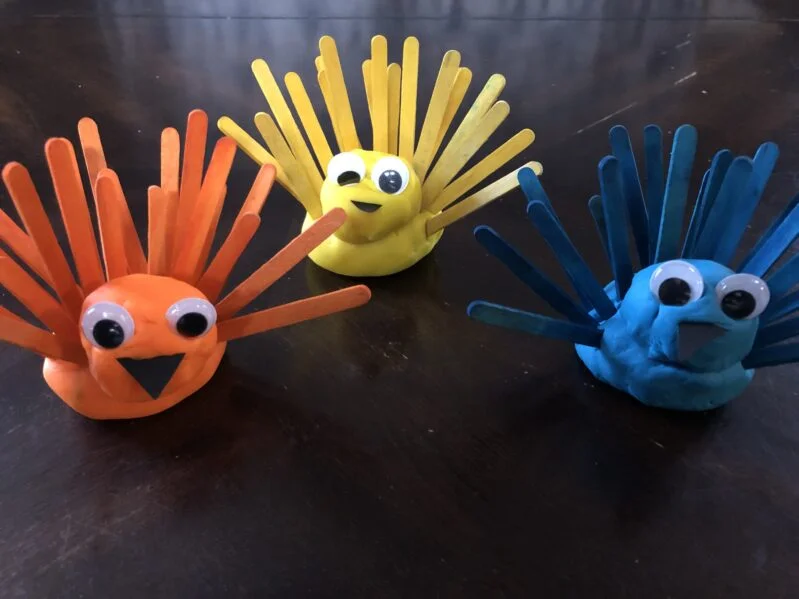
The appeal of this Thanksgiving activity is its simple setup: children shape play dough into turkeys, then add matching craft stick feathers. There’s no elaborate preparation or fixed pattern to follow, so the project can work as a short activity at the table or stretch into longer, child-directed play. As children choose colors, roll dough, and place the sticks, they get a playful chance to practice color recognition and fine motor control.
Set out a few simple supplies
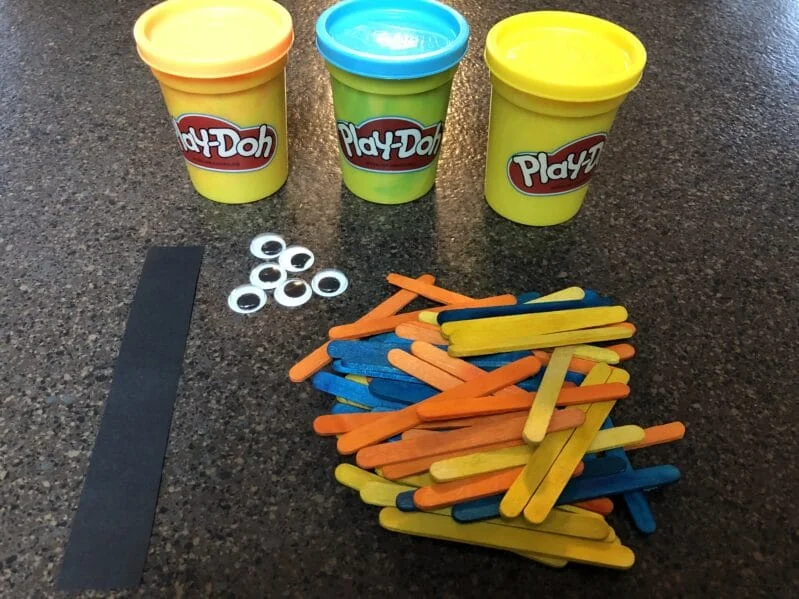
You’ll need googly eyes, play dough in colors that match your craft sticks, colored craft sticks or feathers, and black construction paper for the beaks. The materials give children a basic structure to start from, while leaving room to decide how their turkeys should look. If you’re out of play dough, try this easy soft play dough recipe.
It helps to put the materials within reach before inviting children to begin. They can see which colors are available and choose a dough color to build around; that small choice gives the activity a clear starting point without requiring a model they have to copy. If you’re working with younger children, setting out only a few colors at first can make the selection feel manageable.
Build the turkeys, then match the feathers
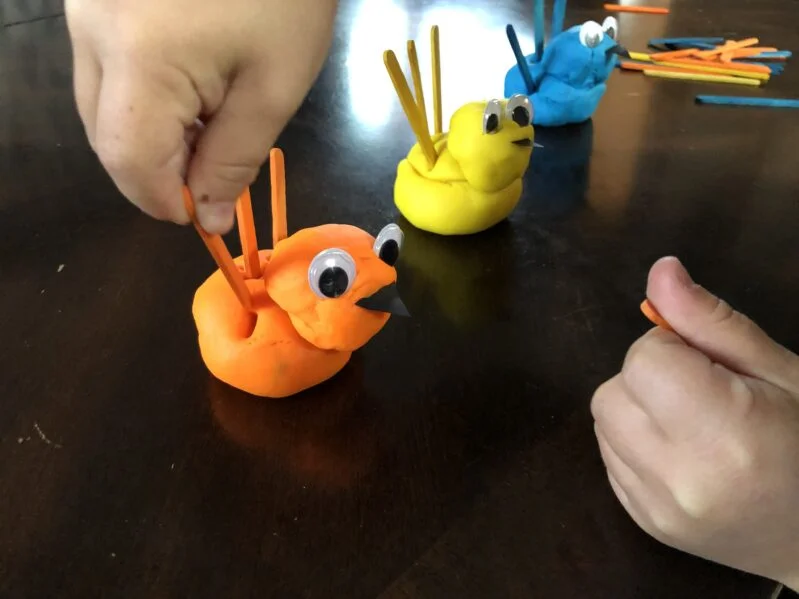
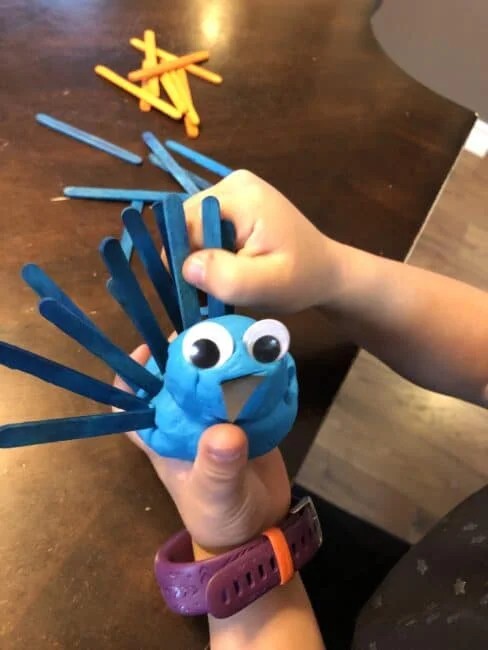
Roll two balls of play dough, one larger than the other. Stack the smaller ball on the larger one to form the turkey, then add googly eyes and a beak. Repeat with the other dough colors. The shape is intentionally simple: children can focus on handling the dough and assembling the parts without needing a detailed craft template.
Rolling the dough gives little hands a concrete task, and placing the smaller ball on top turns those separate pieces into a recognizable figure. Some children may want help getting the balls to sit together; others may prefer to press or reshape them until the turkey holds its form. Either way, the process leaves room for experimenting with size and placement.
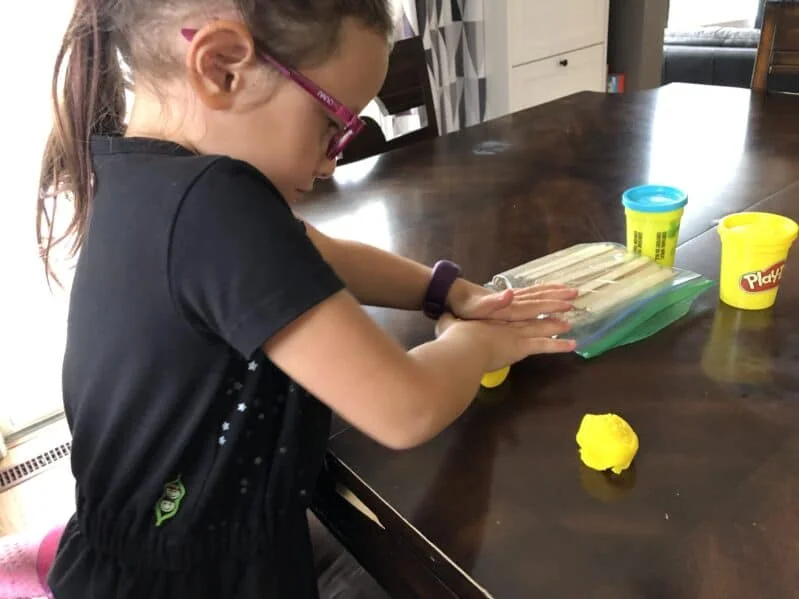
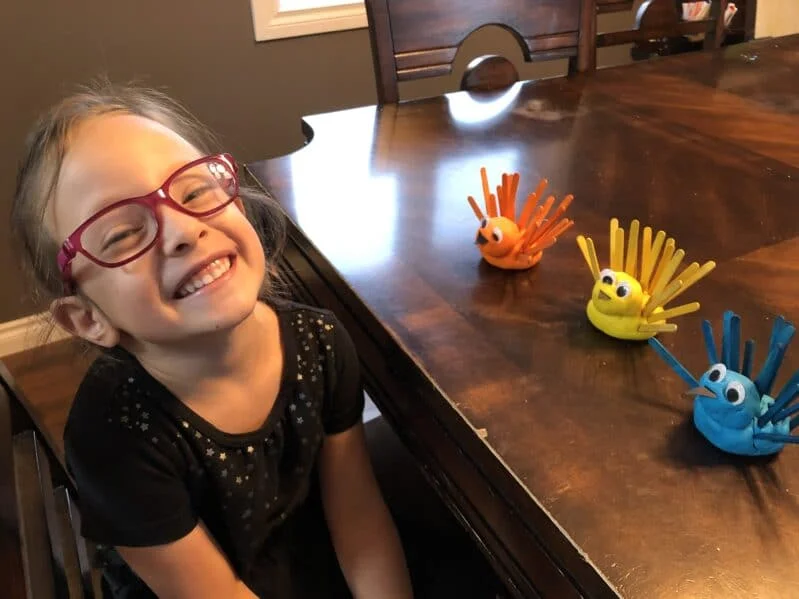
Once the turkeys are ready, have children pair each one with craft sticks of the same color. They push the sticks into the dough to make feathers, combining a color-matching task with hands on shaping. The match is visible as they work: the color they choose for the turkey guides which sticks they add, then the finished figure shows the result of that choice.
This is more significant than it looks for a simple seasonal craft. Children aren’t only naming or spotting colors; they’re using a color as a rule for what to do next, while coordinating their hands to press each stick into the dough. The activity doesn’t need to become a lesson with a right answer for every step. The repetition itself gives children a chance to notice the match and practice it.
For younger children, start with two colors to keep the matching straightforward. With fewer options in front of them, they can concentrate on comparing the turkey and sticks rather than sorting through a larger pile. Older kids can try a color-mixing variation: give them a purple turkey and ask them to match it with red and blue sticks. That adds a new question to the activity, since the colors on the turkey and feathers won’t be identical.
There’s no need to rush toward the variation. A child who wants to make several straightforward matches is still getting practice with the central idea, while one who’s ready for a puzzle can explore how colors relate. If you’re working in this space with children of different ages, offering the same materials with different levels of choice can let everyone take part at their own pace.
Let children set the pace
The activity can stay brief, but children may want to keep adding feathers. The creator’s youngest daughter asked for more sticks after finishing her first batch, saying her turkey needed more feathers. That kind of open ended play lets kids decide when their creation feels complete. The project has a stopping point when the child says it’s done, rather than when every turkey reaches a prescribed design.
(And this is the part most people overlook.) A simple activity can be useful precisely because children can change it as they go. More feathers, a different arrangement, or another turkey can extend the play without requiring a new set of instructions. Just room to keep going.
Why the open-ended format works
The children enjoyed building the turkeys and were proud of completing the color match. That response points to a useful balance: the activity has a clear task, but it doesn’t demand that every child make the same finished turkey. Children can work toward a match and still make choices about the details, which gives the project a sense of completion without closing off play too early.
For families looking for more seasonal ideas, there’s another turkey fine motor game and a collection of turkey crafts. A handful of dough and sticks is enough to turn color practice into a small Thanksgiving project. What this means for you is that the activity can fit around the materials and time you already have: begin with a couple of colors, let children build, and see whether they want to stop after one turkey or keep adding feathers.

Discussion
Sign in to join the discussion.