Paper plates, egg cartons, and torn paper make a surprisingly cute polar bear. A preschooler did most of the work, and the craft stick was a mistake.
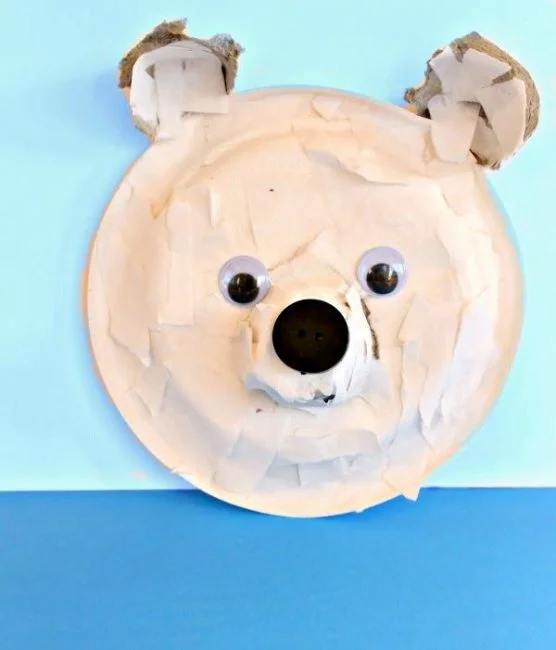
Most kid crafts look like adult crafts that went wrong. This polar bear didn't. It came out charming, and a preschooler did most of the work, which is the detail that matters most here. That's the part I'd focus on if you're deciding whether this project is worth your afternoon.
Materials and the first build
The whole project uses a paper plate, an egg carton, and paper. That's it, plus glue, buttons, and googly eyes. Nothing here requires a trip to a specialty store, which is a big part of why this kind of craft works in a busy household. If you already keep a stash of basic preschool craft supplies, you can start right now.
Start with the base. Glue one egg carton cup to the middle of the paper plate, and let that anchor become the bear's nose. White glue works, though hot glue is fine too. The choice mostly comes down to how long you can wait between steps, and whether little hands will be near the glue gun.

The tearing is the real activity
While the glue set, the preschooler tore a sheet of white construction paper into long strips, then tore those into pieces of varying size. I suggested smaller pieces were better. He took that further than I intended, shredding bits down to the point of near invisibility. Honestly, that's the most useful outcome of the whole session, because it tells you the kid was in charge of the process.
Tearing paper does more than fill time. It builds the hand and finger strength that later supports writing, and it's a gentler starting point for kids who find scissors frustrating. Scissors demand coordination, steady grip, and a willingness to accept a wobbly cut line. Tearing asks for less precision and gives instant feedback, which is why many early-childhood teachers reach for it first. If you want a deeper list, this one covers objects for strengthening fine motor skills.
Covering the plate
Once the paper was torn, Sam brushed a thick coat of glue across the plate. More glue worked better than less. He covered the whole surface with glue, pressed the torn paper on, and added extra glue wherever pieces overlapped. The result looks messy in progress, and that's fine. Glue-heavy projects tend to look worst right before they look best.

He also covered the egg carton nose with paper. He learned fast that too much glue on the nose made the paper slide off, so he dialed it back. That kind of self-correction is exactly what a craft like this should teach. Nobody handed him a rule. He saw the paper sliding, adjusted, and kept going, which is a small but real problem-solving loop.
Adding ears and features
The bear had no ears, so I cut a second egg carton cup in half and glued the pieces to the sides of the head. I switched to hot glue for this step so it would set quickly and Sam could get back to covering the head with paper. Mixing adhesives like this is a reasonable move, but it also means an adult is holding the glue gun, so plan for supervision.
While everything dried, we hunted for a button nose and some button eyes. We found one button nose and two large googly eyes, which turned out to be plenty. Here's the thing: the bear reads as friendly precisely because it has fewer features, not more. Too many buttons and the face gets busy fast, and a preschooler's eye goes straight to the clutter.

Where it went sideways
Sam decided the finished bear should be a mask, so he attached a craft stick. That led to roaring, then more roaring aimed at his little brother, and then tears. The bear itself was fine. The stick was the problem.
My advice: skip the craft stick. The bear looks great on its own, and a sturdier backing would be a better bet if you do want a mask. A flimsy stick on a paper plate with a glue-heavy surface won't hold up to actual play, and it's the sort of thing that ends the session in frustration. (And this is the part most people overlook: a finished craft that a kid immediately wants to wear, wave, or aim at someone is a sign the project has a second life, so plan for that before the glue dries.)
Where it leads
The craft works well as a launch point. Polar bear books are easy to find this time of year, and Polar Bear, Polar Bear, What Do You Hear? by Bill Martin Jr. and Eric Carle is a favorite here (affiliate link). Reading the book first gives the bear a purpose, and the kid already has a reason to care about the finished product. Pair the book with a set of torn-paper animals, one for each character, and you've got a retelling project that takes a few afternoons.
I'm not promising I'll attempt that. My crafting commitment is limited right now. But if you try it, send a photo. It might be the push I need.
What this means if you're planning your own
The bigger takeaway isn't about polar bears. It's about how little structure a good preschool craft needs. You supply the base, the materials, and a few suggestions, then step back and let the child make decisions. Some decisions will be wasteful, like too much glue or shredded paper that goes everywhere. That's the cost of the activity, and it's a smaller cost than most parents expect.
If you're working in this space, whether as a parent, a teacher, or someone running a weekend program, the practical lesson is to treat the adult's role as setup and restraint. Pre-cut nothing that a child could tear. Keep the feature count low. And don't attach anything to the finished piece that you haven't tested under real play. The projects that last are the ones where the kid feels ownership, and that usually means letting the bear come out a little lopsided.
Discussion
Sign in to join the discussion.