Everyday self-talk can teach kids confidence, resilience and a healthier view of food, work and their bodies.
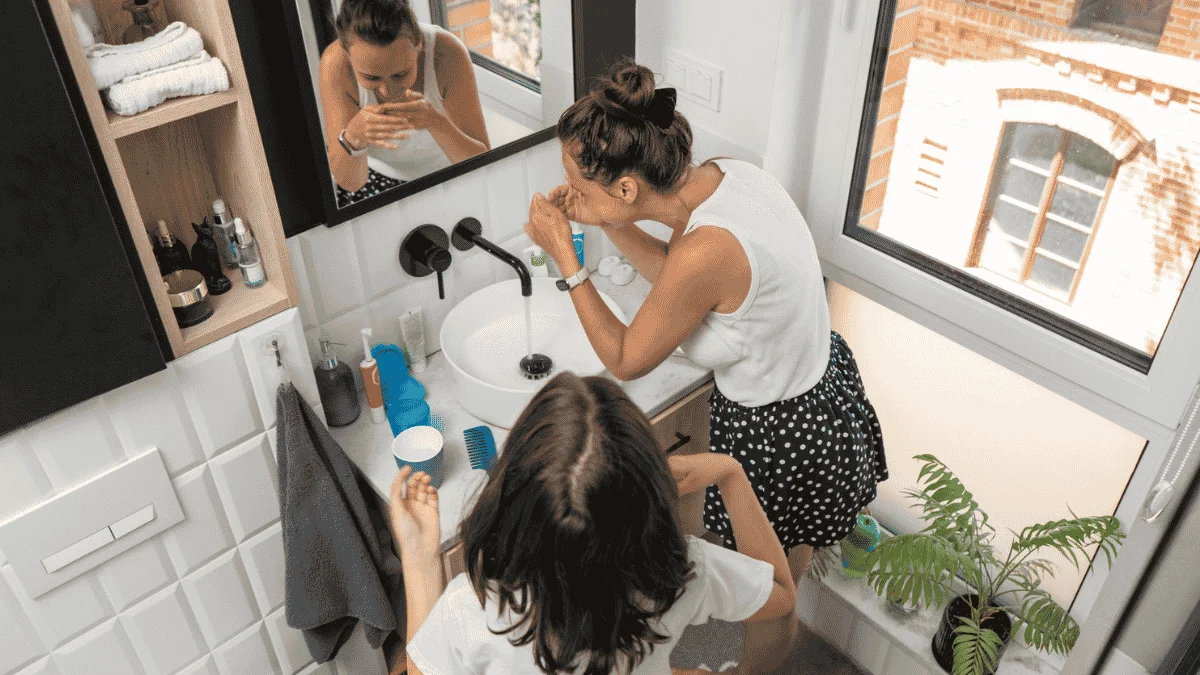
Children absorb how adults judge themselves, often through remarks that seem too ordinary to matter. A parent’s casual complaint about an outfit or a food labeled “bad” can teach a child to scrutinize bodies and meals. Everyday expressions of self-respect offer a different model: they show that people can value themselves without pretending to be perfect. That example matters before ideals from YouTube and social media enter the picture, where appearance and approval can become public measures of worth.
The point isn’t to pretend every day feels good. It’s to show children that confidence can coexist with mistakes, frustration and change. These nine phrases make that lesson concrete, especially when they’re part of ordinary conversation rather than a speech delivered only after something goes wrong.
Talk about your body with respect
“I look nice today.” Say it when you’re tired or feeling under the weather, too. Kids notice whether adults speak about themselves with kindness; hearing positive self-talk can help make it familiar to them. The value isn’t in insisting that every reflection in the mirror feels flattering. It’s in showing that a difficult morning doesn’t have to turn into a list of insults about your appearance.
“This outfit makes me feel beautiful.” Getting dressed can be frustrating when clothes don’t fit or look as expected. Naming what you like—a color that suits you, comfortable leggings for the park, or a hat that stands out—shifts attention from criticism to personal style. It also makes the statement personal: beauty here describes how someone feels in what they chose, rather than setting a rule for how anyone else should look.
“I’m glad my body protects me and keeps me alive every day.” A body’s value isn’t defined by its size. It lets us kick a ball, push a swing and join a board game. Talking about what your body can do helps children see it as part of living, not just something to judge by appearance. That perspective won’t erase every worry a child may have about how they look, but it gives families another way to talk about bodies: through movement, comfort and the everyday work of being alive.
Make room for food and movement
“Food keeps me healthy and happy.” Calling foods “good” or “bad” can shape how children think about eating and their bodies. A more neutral approach treats broccoli as broccoli and a cookie as a cookie, making space for both nourishment and enjoyment. (For more on food neutrality, see why food isn’t good or bad.) The distinction matters because moral labels can make an everyday choice sound like a judgment about the person making it. A calm description leaves room for food to serve different purposes, including pleasure.
“I enjoy exercising because it makes me feel strong.” Movement can support wellbeing for reasons beyond weight. Talking about feeling strong, supporting the brain and staying active gives kids a broader picture of why exercise matters. It can also make activity easier to discuss as something people do for how it feels and what it lets them do, rather than as punishment for eating or a way to change their appearance. That framing is more useful than treating exercise as a test of discipline.
Model how to handle work and setbacks
“I am proud of my job.” Whether you’re a stay-at-home parent, work remotely or leave home for work, explaining what your day involves can help children understand your time and effort. It also makes clear that being busy doesn’t mean you’d rather skip reading Dragons Love Tacos for the tenth time. Children can see that work has a place in family life without interpreting that place as a lack of care. A few plain details about what you do can make the effort visible.
“That was challenging, and I’m going to try again.” Children learn from seeing adults meet difficulty without treating a setback as the end of the story. The source article points to Albert Einstein, Michael Jordan and Oprah as examples of people who faced failure before finding success. The more immediate lesson, though, is in what a child sees at home: an adult can acknowledge that something didn’t work, decide what to do next and keep going. Not every attempt succeeds. Trying again still matters.
“I made a mistake.” Owning an error shows children what personal responsibility looks like. Admitting you were wrong can be difficult, but it gives them a useful example of how to respond when they get something wrong, too. The phrase works best when it’s paired with a clear acknowledgment of what happened, rather than an excuse or a demand for instant forgiveness. A model of accountability. That can help children understand that mistakes call for honesty and repair, not shame.
Keep the door open to change
“I believe every day is a new chance to start over.” Life can be hard, and negative thoughts can take over. Reminding kids that the present can lead to a different future gives them room to imagine change. That might start with writing down notes of gratitude or with asking for the help you need. The phrase doesn’t promise that circumstances will change overnight; it gives children language for taking one next step, even when the whole problem remains unsolved.
Children won’t learn confidence from a single sentence. They build it by hearing, again and again, that their parents can value themselves, learn from mistakes and begin anew. The repetition is the point: these ideas become more credible when children see them reflected in how adults talk, recover and treat themselves on an ordinary day.
Why the example matters
This is more significant than it looks. A parent’s words don’t determine exactly how a child will feel about their body, food or abilities, but they help establish what kinds of judgments sound normal at home. Children also notice the gap between what adults say and what they do. A compliment followed by relentless self-criticism may send a mixed message; a simple, repeated effort to speak with respect gives the words more weight.
If you’re working in this space, the practical point is modest: confidence isn’t a performance of constant happiness. It’s a way of responding when things go badly, when a body changes, or when a meal is simply a meal. And this is the part most people overlook: the phrases matter because they make those responses audible. Parents don’t need a perfect script. They need language that leaves room for self-respect, honesty and another try.



Discussion
Sign in to join the discussion.