A Hanukkah reflection on raising kids who feel proud of their Jewish identity without shrinking it to fit other people's expectations.

Every Hanukkah I do what most Jewish parents do. I buy the kids presents. Some are things they've asked for, some are things I know will make them squeal, and at least one is a gadget that gets loved hard for three days and then disappears under a bed.
I enjoy those moments. But as my kids get older, my mind keeps drifting to the gifts that don't fit in a box. Children often want these more than anything: to feel seen, safe, loved, and free to be entirely themselves.
Confidence. Resilience. Pride in who they are. The freedom to walk into a room without calculating whether they need to make themselves smaller to belong. Those are the things I wish someone had handed me a lot earlier.
The Kid Who Wanted to Be a Good Representative
I grew up in London, where most of my classmates weren't Jewish. We lit candles, ate Shabbat dinner, and went to synagogue. But Judaism felt like something we switched on at particular times, not something threaded through an ordinary school day.

Summers in Israel were a different experience. Each childhood summer I spent time with my mother's large, warm extended family, and there Jewishness wasn't an event. It was the background noise of daily life, present in conversations, routines, and holidays without anyone having to explain it.
In London, though, I felt like a minority every day, and I drew a conclusion that now seems almost comical. I decided I had to be a flawless representative of the Jewish people at all times. A single preteen's behavior, I thought, could shape how strangers saw an entire people.
I took that job very seriously. I wanted to do the right thing and keep the people around me comfortable. Looking back, I can't say that impulse came purely from being Jewish. Wanting to smooth things over was part of my personality. Still, I remember how much mental energy I spent managing how I came across, and I wish I'd felt freer to simply be myself.
(Claudine Hartzel Photography)
What My Daughter Did Without Thinking
A non-Jewish friend once told me something about my older daughter, Sacha, that I haven't been able to shake. He drives her to drama class every week, and he said those car rides had become the best part of his Monday. She talks about Jewish holidays, traditions, and stories the whole way there, with no prompting at all.
"I can tell she's really proud of her family," he said.
I was delighted, and a little startled. Sacha doesn't agonize over her Jewish identity. She doesn't stop to wonder whether mentioning it outside our house is appropriate. She isn't making a point. She's sharing something she loves, and her Jewishness comes up in conversation because it's part of her life.
That contrast with my own childhood stuck with me. Over and over, people have come up to me after talks and said some version of the same sentence: "I wish I'd learned this as a kid." Each time, I find myself asking why we make people wait until adulthood to learn how to own who they are.
Why Not Just Shrink the Adult Lessons?
I've spent a lot of time speaking to Jewish women about owning their identity and refusing to shrink themselves for other people's comfort. Jewish women deserve to live fully, boldly, and joyfully, and I've built a lot of my work around that idea.
Eventually I realized the same ideas applied to children. The problem was that I didn't want to take grown-up concepts and water them down for kids. I also didn't want to lecture them about confidence or Jewish pride. Kids tune out a lecture faster than anyone.
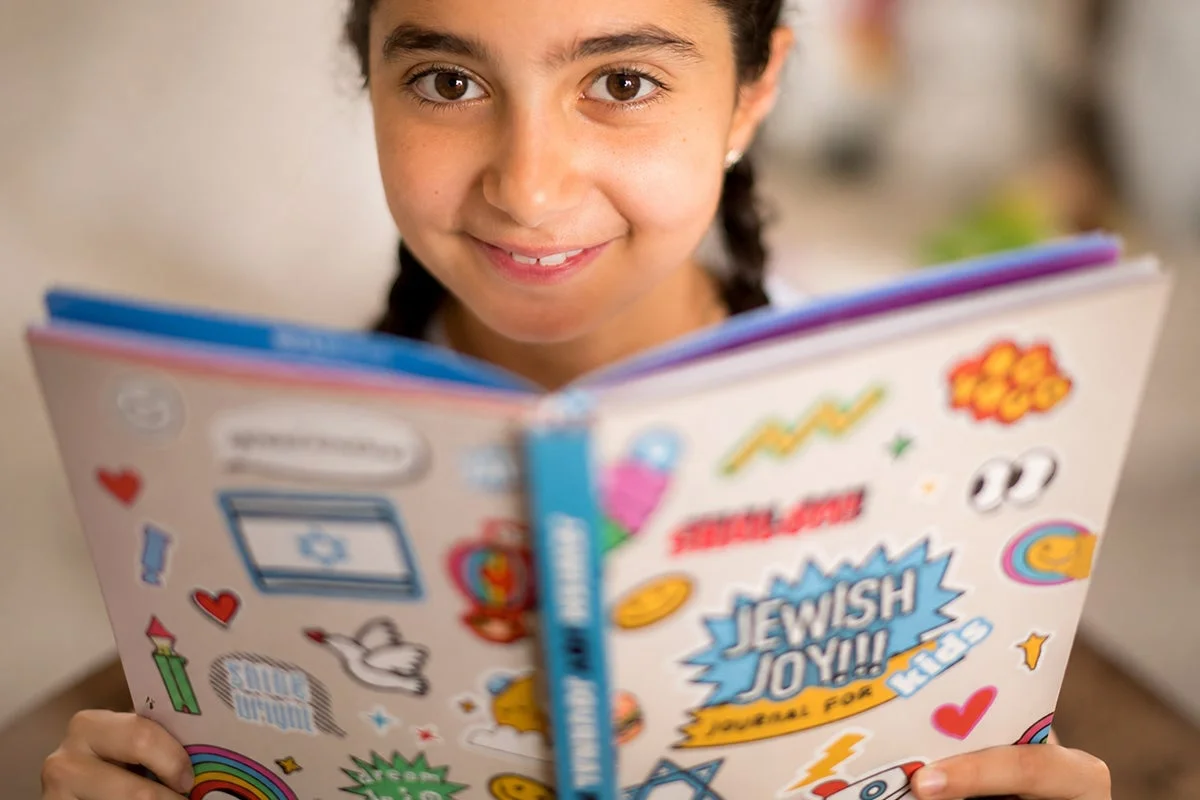
What I wanted instead was a space where children could discover those things on their own. That's the thinking behind the Jewish Joy Journal for Kids, a guided journal for children roughly six to twelve. I should be upfront: I created it, and I sell it. Weigh my perspective with that in mind.
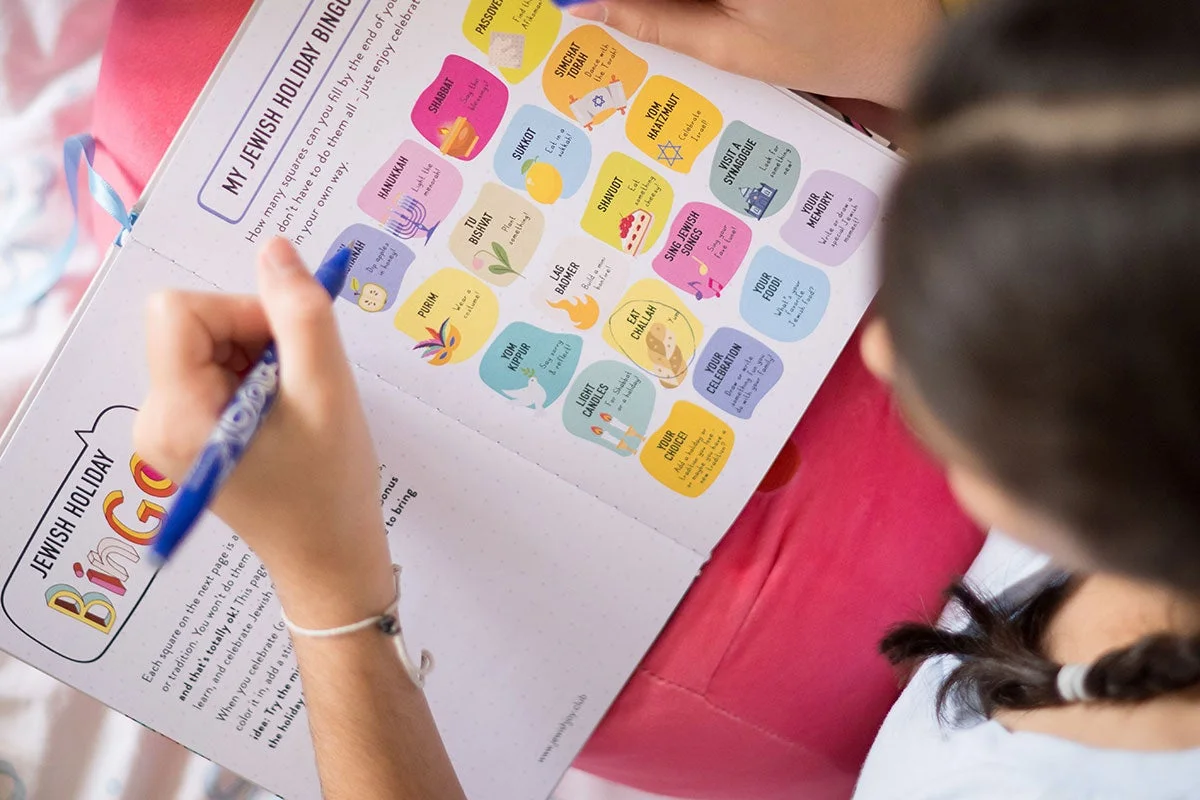
The journal is built around questions rather than instructions. It doesn't tell children who they should be or how they should feel. It asks them to explore what matters to them, Jewish identity included, and to write down what they find.
Testing the Prompts on the Toughest Critic in the House
My younger daughter, Zara, had a major role in the process. She had opinions about everything, which was exactly what I needed. She could tell me what actually excited her, what felt like homework, and what a kid would realistically keep using past the first week. We also tested the prompts with a number of other children, and their reactions changed the final version more than once.
(Claudine Hartzel Photography)
One page is called "What Makes Me, ME!" It invites kids to write about the people, places, and traditions that shape who they are. Other prompts ask them to recall a time they were brave even though they were scared, to name something they're proud of, or to describe what brought them joy that day.
These are small questions, and that's deliberate. Reflection like this accumulates. We can tell our kids they're capable and resilient all day long, but they have to find their own strengths, hear their own voice, and learn to trust it. A parent can't do that part for them.
What I Hope Stays After the Journal Closes
I want Jewish kids to grow up owning every piece of who they are. I want them to talk comfortably with someone they think is older, cooler, or cleverer, without placing that person above themselves. I want them to understand that they aren't better than anyone else, and that nobody is better than them either.
Most of all, I want them to walk into any room as themselves, without the mental arithmetic I used to do about what to share, how to act, and how I might come across.
A journal won't erase every insecurity. Growing up is still growing up, and kids will wobble. But I hope a few minutes of reflection each day gives children a head start on knowing themselves, trusting themselves, and feeling proud of where they come from.
So yes, I'll buy the presents this Hanukkah, and the kids will love a few of them for exactly three days. What I'm really hoping to give them is harder to wrap: a clear sense of who they are, and the confidence never to edit any part of it for anyone.



Discussion
Sign in to join the discussion.