Gal Gadot is reportedly eyeing the lead as Fox Entertainment Studios and Moriah Media develop the middle-grade novel "Don't Feed the Lion" for the screen.
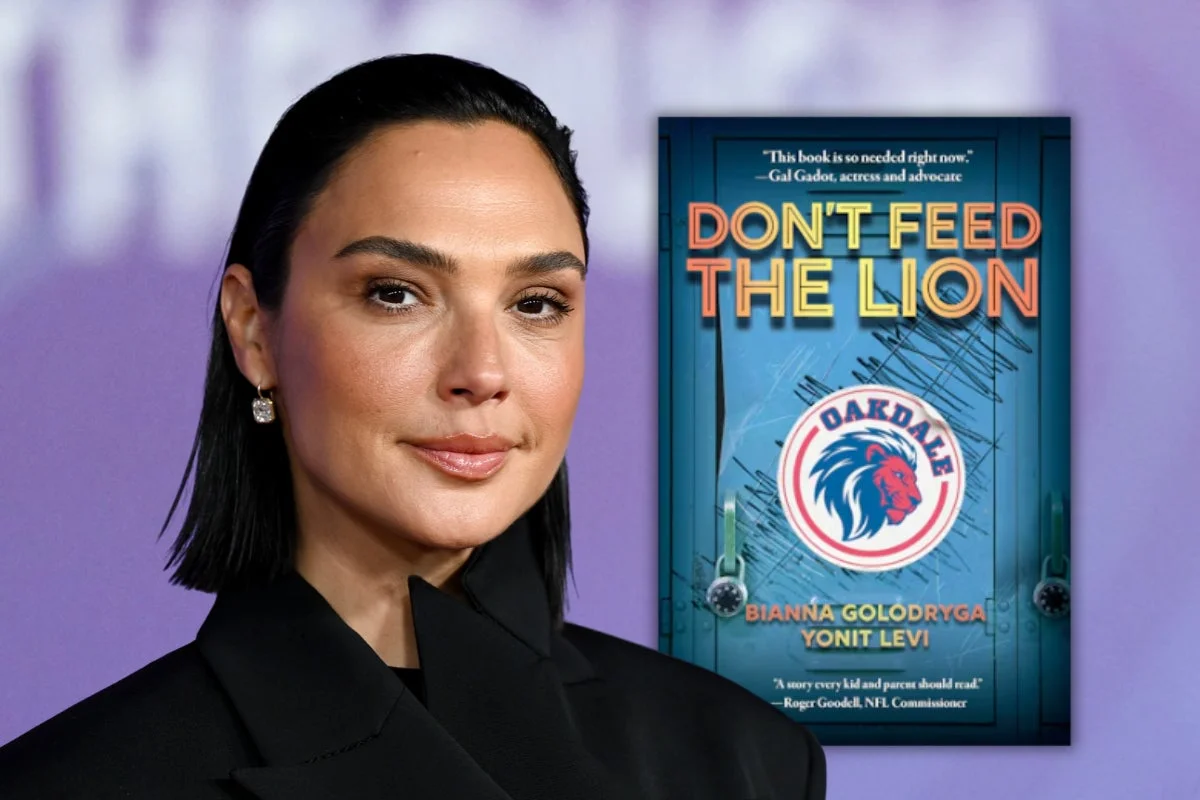
A year after its November 2025 release, the middle-grade novel "Don't Feed the Lion" is headed to the screen. Fox Entertainment Studios and Moriah Media, the storytelling arm of the Simon Wiesenthal Center, are developing the adaptation with Gal Gadot involved. Deadline reports Gadot is eyeing the lead role, though no casting has been announced.
The book's authors are Bianna Golodryga, an Emmy-winning journalist, and Yonit Levi, a news anchor for Israel's Channel 12. Two broadcast journalists writing their first novels for 8-to-12-year-olds looks like a stretch on paper. It makes more sense once you hear why they did it. Golodryga's son was affected by NBA player Kyrie Irving's antisemitic social media posts, and she went looking for a book he could connect with. Beyond Gordon Korman's "Linked," she found few options that tackle antisemitism at that age. So she and Levi wrote the book they couldn't find.
Two broadcasters, one first novel
Here's the thing: writing for children isn't as far from broadcast news as it first appears. Newsrooms train people to be concise and to translate a tangled story into something an audience can follow in a few minutes. Writing for readers of this age asks for the same discipline, just with a different vocabulary and much less patience for lecturing. Journalists who've spent careers explaining hard events to general audiences may be better equipped for that challenge than they expect.
There's also a plainer reason this project makes sense. Golodryga wasn't chasing a new genre. She was responding to a gap she saw at home, which is usually a more reliable starting point than a market analysis. Whether the book fills that gap for other families will depend on how it reads to the kids it's meant for, and that's a question no author can answer in advance.
The story at the center
Thirteen-year-old Theo Kaplan spends his days getting ready for his bar mitzvah, playing soccer with his team and marking Shabbat with his family. Then his soccer hero, Wes Mitchel, makes an antisemitic comment, and the fallout reaches Theo's middle school in Chicago. Theo, his sister Annie and their friend Gabe work out what it means not to "feed the lion" and how to stand up to hate speech.
The everyday details are the smartest choice in the book. A bar mitzvah, a soccer team and Shabbat at home tell a young reader that Theo is a normal kid, not a symbol. When the hate speech arrives, it doesn't interrupt a life defined by something else. It lands on top of an ordinary one. That's a more honest way to show how bigotry enters a child's world, and it's more uncomfortable for that reason.
Mitchel's comment matters less as a plot device than as a question about idols. Theo's hero turns out to be someone capable of saying something harmful, and the boy has to decide what loyalty means after that. Kids this age often run into the first disappointing realization that an admired adult can be wrong. Few books handle that moment with this much directness, and I'd argue the premise gives the authors a real chance to earn it. The phrase "feed the lion" is doing a lot of work here. It's a metaphor, and metaphors that stick with children tend to be the ones that give them something to do, not just something to avoid.
The book has already drawn backing from a range of public figures, including Sacha Baron Cohen, Robert Kraft and Jake Tapper. Celebrity endorsements for a middle-grade novel are unusual, and they tell you where the book's ambitions sit. Gadot and her husband, Jaron Varsano, framed their support in direct terms: "'Don't Feed the Lion' opens the door to conversations that matter, and we are grateful to be part of bringing it to life." That wording frames the book as a conversation starter rather than a product, which is a deliberate positioning. (And this is the part most people overlook) Endorsements like these speak to the subject as much as the prose, and that's a different kind of praise.
Why the screen version matters
One reader who has handed copies to students and read the book with an 11-year-old son says the boy felt empowered by a protagonist he could relate to. That kind of connection is the book's strength, and it's also why a film could reach further. Young viewers often engage with a story on screen in ways a reluctant reader never will.
Gadot's back-cover blurb reads, "This book is so needed right now." That line applies to the film too. Jewish kids are facing a hostile climate, and they need stories that show them how to respond without shrinking. Theo's arc, from distraction to a stand against hate, is a useful one to see on a big screen.
I'm skeptical of how quickly any book becomes a film. Plenty of projects in development never reach a camera, and attached stars don't guarantee a finished production. That's not a knock on this one; it's a pattern worth keeping in mind when a headline reads "headed to the screen." Still, the premise is simple enough to adapt without losing its core.
Whether a particular moment calls for a particular story is a judgment readers make for themselves, and a back-cover blurb can't settle it. What the line does reveal is the author's and publisher's intent to position the book as timely. That's a reasonable instinct, and the film will have to meet it on its own terms.
What this means going forward
If you're working in film development or children's publishing, this project is a useful case study. A recognizable name can open doors and help a project get greenlit. It also creates a pull toward rebalancing the story around the person on the poster, and that's the risk I'd watch most closely.
Casting is still open, and the adaptation has no firm timeline yet. Deadline's reporting on Gadot's interest is the most concrete detail available, and it stops short of a deal. Until a cast and a production team are announced, anything about the film's shape is speculation. Keeping that in mind will save you from reading too much into early headlines.
And yet the book's core appeal is that it's about a kid, not a celebrity. Keeping Theo's perspective intact will be harder than it sounds, because marketing and star-driven projects tend to gravitate toward the most visible face in the room. A faithful adaptation could still give this story a reach the book alone can't, particularly for families who wouldn't pick up middle-grade fiction on their own. The question that will matter most is whether the film keeps Theo at its center and treats his voice, rather than the star's, as the point.


Discussion
Sign in to join the discussion.