A simple outdoor activity turns fall leaves into a color and letter recognition chart, with options to adjust the challenge for young children.
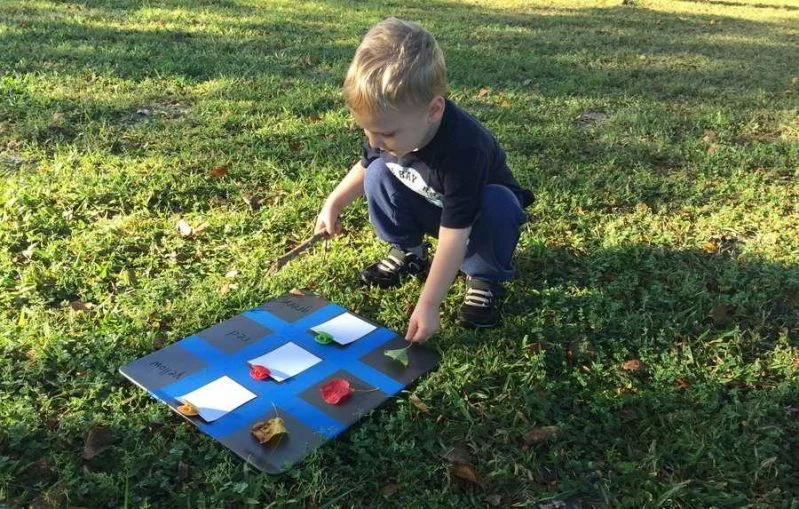
A handful of fallen leaves can turn a backyard walk into a short lesson in color matching and early literacy. This toddler activity takes about 10 to 20 minutes, gets children moving, and uses materials many families already have at home. Its appeal is the way it connects a familiar outdoor find with simple tasks at the table: looking closely, sorting, naming, and making marks. There’s no need for a perfect set of leaves or a polished chart. The activity works best when the child’s observations lead the pace.
Set up the chart
You’ll need a baking sheet or tray, painter’s or masking tape, a dry erase marker with an eraser, three squares of white paper, three magnetic clips, and assorted crayons. The magnets hold the paper in place when it’s breezy; tape works too. A tray gives the materials a defined place, which can make it easier for a toddler to see where each part of the task belongs. If you’re working at a table, the same layout can help keep loose leaves and crayons from drifting into one pile.
Before bringing the children over, use tape to divide the tray into three columns and at least three rows. The first column is for leaves. Clip the paper squares in the middle column, and leave the third column open for color names. Think of the rows as matching spaces: each one can connect a leaf, a crayon mark, and a written color word. The layout doesn’t have to be exact. It just needs to make those three pieces easy to see together.
Collect and sort leaves
Head outside and invite your toddler to look closely at leaves in different colors. Let them choose a few favorites, then place one leaf in each row of the first column, grouping leaves by color. The search is part of the activity, not just preparation. A child might notice that leaves vary in size, shape, or condition before settling on a color, and that gives you a natural opening to talk about what they see.
Keep the collection manageable. A few leaves are enough to get started, and limiting the choices can help a younger toddler stay engaged with the chart rather than becoming distracted by a large pile. You can ask simple questions as you walk: Which one looks yellow? Do these two seem the same color? If a child uses a broad label such as “brown” for several different shades, that’s useful information about how they’re sorting, not a mistake that needs correcting.
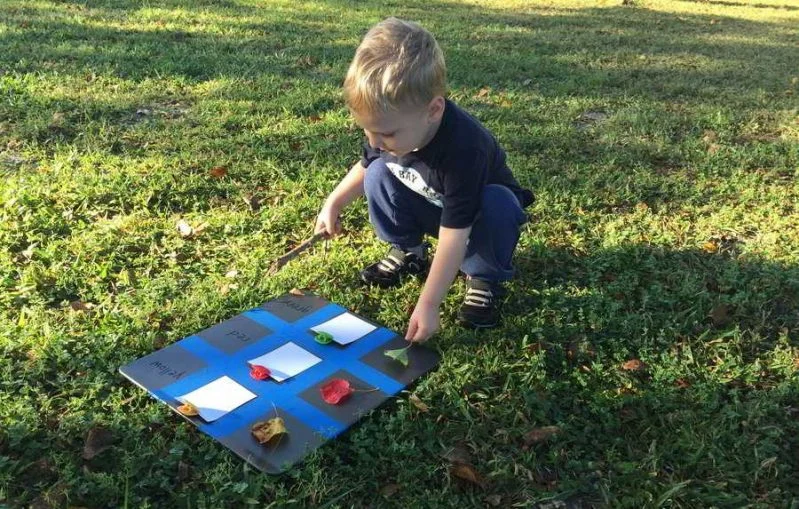
Match colors and letters
Ask your child to name each leaf color, then write its name in the third column. Say the letters together as you spell each word. Next, offer crayons and have your toddler pick a color that matches each leaf, marking the corresponding paper square. This sequence gives children several ways to connect the same idea: they see a color outdoors, hear a word for it, watch the word take shape, and choose a crayon to represent it. For a toddler, those are small but distinct steps.
Let the child do the parts they can manage. They may point to a color, hand you a crayon, or make a broad scribble on the paper; each can be part of taking a turn. You can write the word while saying it aloud, then pause so your child can listen or join in. If the leaf and crayon don’t match exactly, treat that as a chance to compare them. Natural colors are irregular, and crayons can offer a useful starting point for noticing differences.
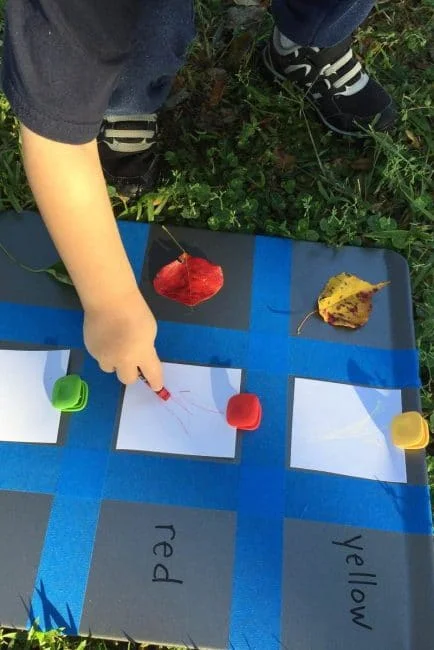
Keep the choices small for younger toddlers. Children ready for more can compare a wider range of crayon shades. You might ask which crayon looks closer to the leaf, or invite your child to put two similar shades side by side. That adds a little more comparison without turning the activity into a test. Here's the thing: the learning comes from paying attention and talking through a choice, not from getting every match “right.”
To add a final letter game, take turns naming a letter in one of the color words and asking your child to find and erase it. For example: “Green starts with G. Can you find and erase that letter?” Continue until the words are gone. The erasing gives the chart a clear ending and lets the child interact with the letters directly. If your toddler isn’t ready to identify a particular letter, point it out together and let them do the wiping. Short turns help keep the game light.
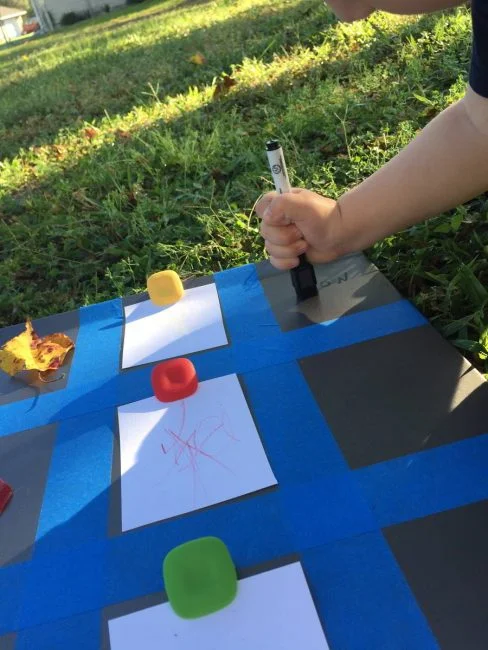
What the activity can teach
The chart gives toddlers a chance to practice noticing, sorting, matching, and naming. Those skills appear here in a connected, hands-on sequence instead of as separate drills. A child has a reason to look at a leaf closely, decide which group it belongs in, and connect its color to a spoken and written word. The letter game adds an early look at how words are made from individual letters, while keeping the focus on play.
This is more significant than it looks: a simple chart can make an abstract word visible beside the thing it describes. It won’t teach a toddler to read on its own, and it doesn’t need to. Its value is in building familiarity through repetition, shared attention, and conversation. If you’re working in this space, the practical point is that a modest activity can offer several kinds of practice without requiring specialized materials.
Keep the learning going
The learning can carry on after the activity, too: children may keep spotting leaves and naming their colors throughout the day. You can follow their lead when they notice a leaf on the ground or see a similar color elsewhere. That small extension makes the chart feel connected to the child’s surroundings instead of like a task that ends when the marker is capped. And yet, there’s no need to stretch the activity if attention has moved on. A few attentive minutes can be enough.
One thing to remember: the chart is a prompt for looking and talking together. If your child wants to sort by size, choose a favorite leaf, or repeat the crayon step, you can make room for that while keeping the basic activity simple. The leaves won’t all fit neat categories. That’s part of the point.
Discussion
Sign in to join the discussion.