A simple guessing game introduces children to Hanukkah objects through touch, conversation and hands-on matching.
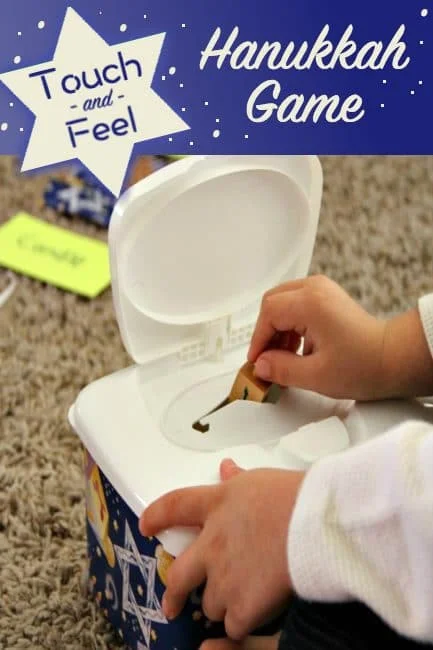
A dreidel, candle or piece of chocolate gelt can become a lesson in observation when children have to identify it by touch. This Hanukkah guessing game uses familiar holiday objects to invite children to notice shape, texture and temperature, then put those observations into words. The idea is simple, but it gives adults a natural opening to talk about what each object is and how it fits into the holiday.
Set up the box
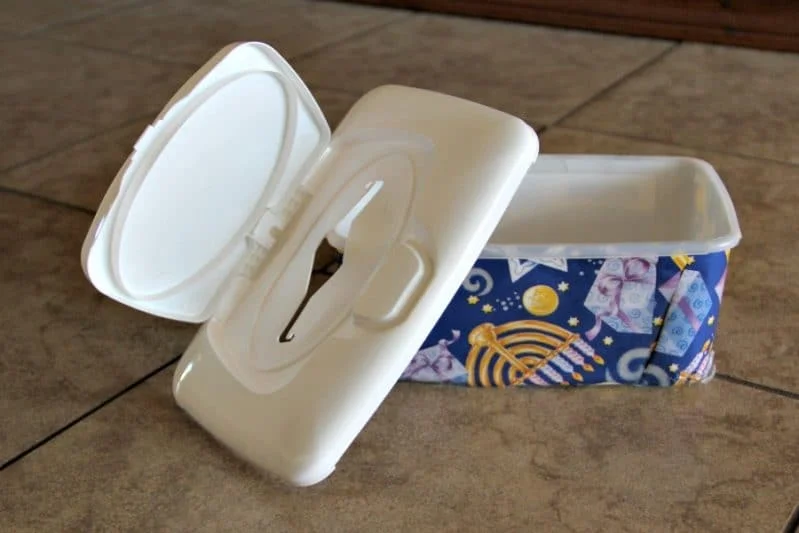
Use an empty baby wipes container or tissue box as a touch box, choosing one with an opening large enough for a child’s hand. Wrapping it in Hanukkah paper is optional; the box’s job is simply to keep the object out of sight while leaving room to explore it by touch. Gather note cards, a pen and a handful of small objects that fit inside.
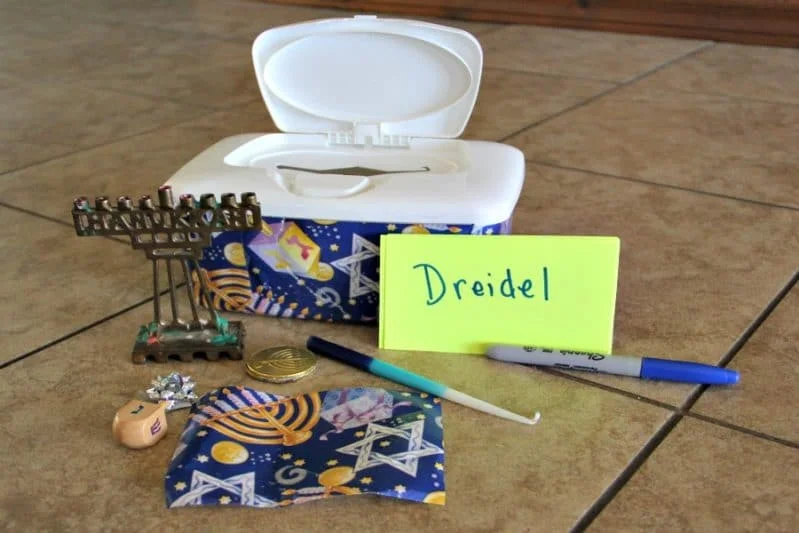
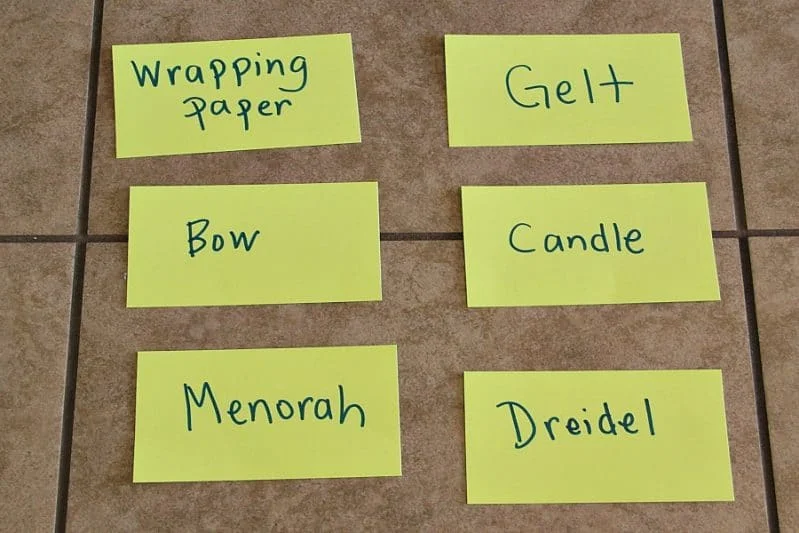
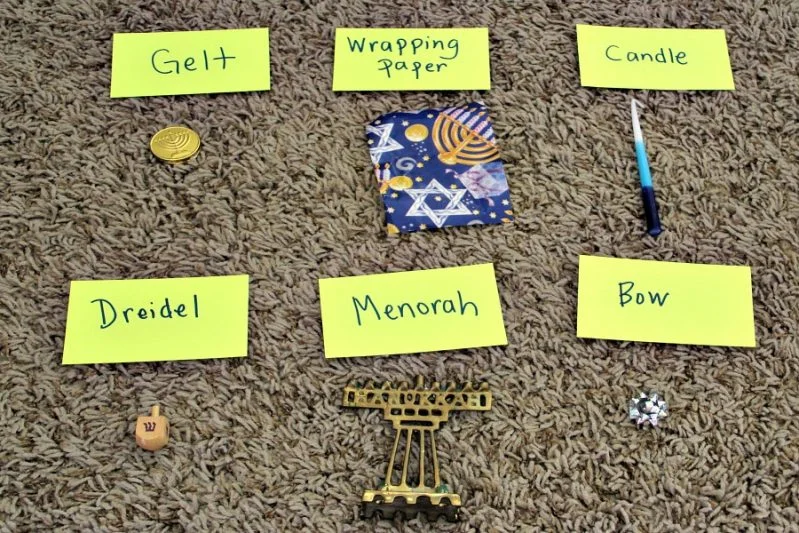
Possible items include a small menorah, dreidel, candle, wrapping paper, bow and chocolate gelt. Handmade Hanukkah crafts can work, too, especially if they have distinct shapes or materials that a child can feel. Write each object's name on a separate card so the game has a visual matching activity as well as a guessing round.
Adjust the clues to the child
Lay out the cards before play, then choose whether they should serve as clues or stay hidden. For a child who already knows the objects, turn the cards face down so the names don't give away the answer. If Hanukkah items are new to them, keep the cards visible and use them to introduce each object as the child explores; seeing the written name can help connect the object with its name.
Put one object into the box at a time, out of the child's view. Invite them to describe what they feel before guessing, and give them time to explore instead of rushing to a correct answer. Questions about whether it's soft or hard, warm or cool, smooth or pointed, and what shape it might be can help them notice details without giving away the answer. Here's the thing: the description is part of the activity, not just a step on the way to the guess.
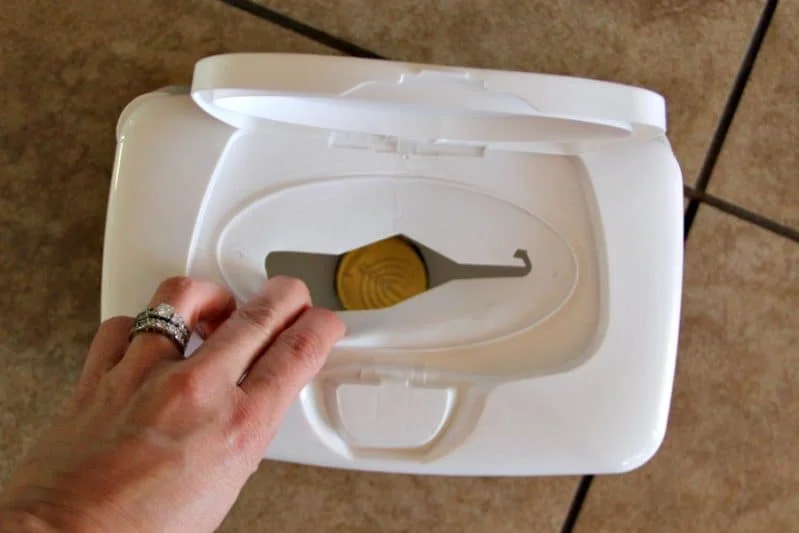
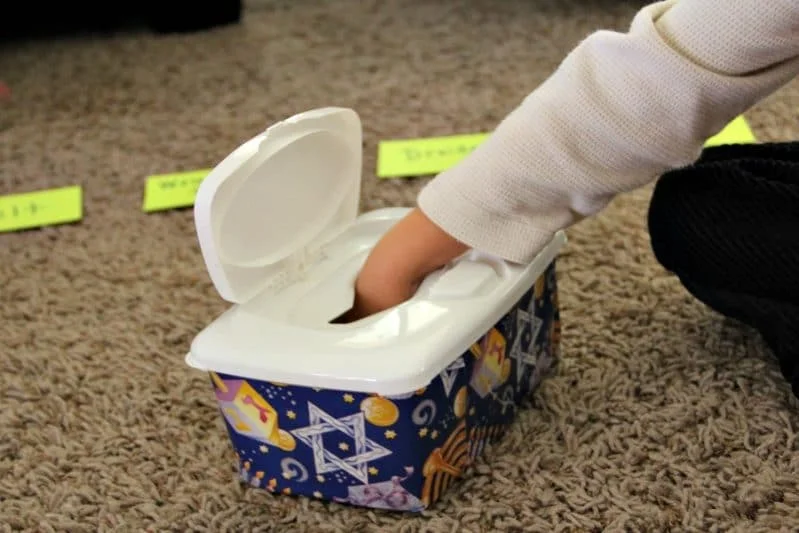
Once the child has guessed—or is ready to move on—let them remove the object and discuss what it is. Place it beside its matching card, giving the child a chance to compare what they felt with what they can now see. Repeat with each item. For a tougher round, wait until all objects have been explored, then turn over the cards and ask the child to match them from memory. A wrong match can prompt another look at the object's features, rather than ending the game.
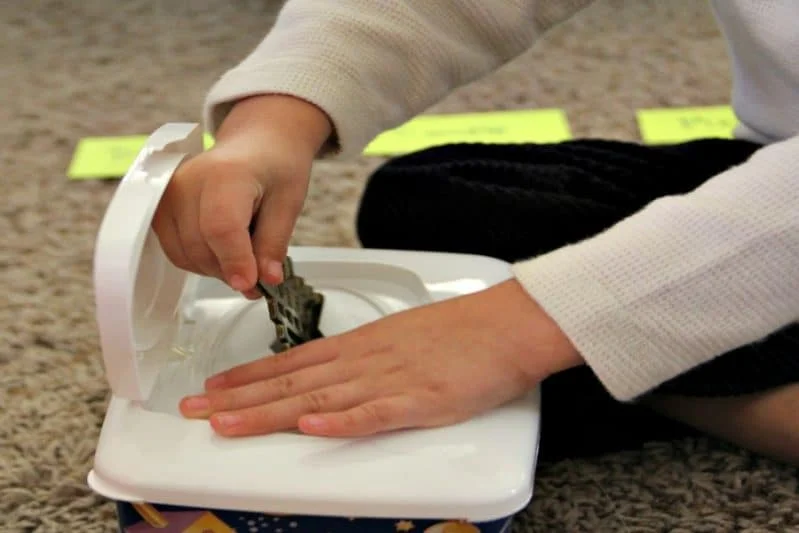
Extend the activity
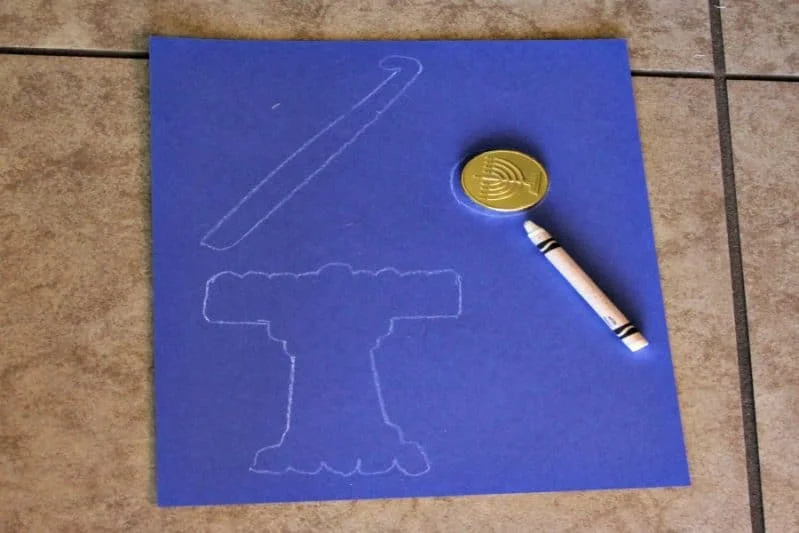
After the guessing round, gather the objects and ask the child to name each one without the cards. They can choose a favorite item to display during the eight days of Hanukkah, trace the objects on paper for fine motor practice, or turn the traced shapes into an outline-matching puzzle. These follow-up ideas shift the focus from touch to recall, drawing and visual comparison while keeping the same materials in use.
Tracing works best when the outlines are clear enough for the child to distinguish, and an adult can name each object as it is drawn. For the matching puzzle, make the outlines first, then invite the child to place each object over the shape that resembles it. A dreidel and a piece of wrapping paper will offer very different kinds of clues, which can help prompt conversation about what makes each item recognizable.
Why the simple format works
The strongest part of the activity is its flexibility: the same objects can support a first introduction to Hanukkah or a memory challenge for children who already recognize them. It asks children to pay attention, describe evidence and connect a name to an object, without requiring specialized supplies or a fixed set of rules. That makes it easy to adjust the pace to the child’s interest.
This is more significant than it looks: a familiar object can prompt a conversation that a card or explanation alone might not. At the same time, the game doesn't need to carry the whole job of teaching a holiday. If you're working in this space, treat the guesses as openings for questions: what does the object feel like, where have you seen it, and what do you know about it? (And this is the part most people overlook.) A child may remember the conversation as much as the correct answer.
Keep the objects small enough for the box but suitable for the child handling them, and let the child stop or skip an item if they lose interest. No score required. A box, a few cards and familiar holiday items are enough to get the conversation started.
Discussion
Sign in to join the discussion.