Explore questions for all six levels of Bloom’s Taxonomy, helping students build foundational knowledge and develop analysis, evaluation, and creativity.
Bloom’s Taxonomy is useful because it gives teachers a way to move students from recalling information to doing something meaningful with it. The sequence matters: students first remember, understand, and apply what they’ve learned; those skills give them a base for analyzing, evaluating, and creating. Higher-level questions can then push students to solve problems, make decisions, think creatively, and consider different perspectives. That’s more than a classroom exercise. It’s practice in using knowledge beyond the lesson.
If you’re new to the approach, here’s a guide to what higher-order thinking is and how to teach it. The questions and prompts below cover all six levels, so you can choose how much thinking a particular lesson should ask of students.
Jump to a section:
- Lower-order thinking skills (LOTS)
- Remember
- Understand
- Apply
- Higher-order thinking skills (HOTS)
- Analyze
- Evaluate
- Create
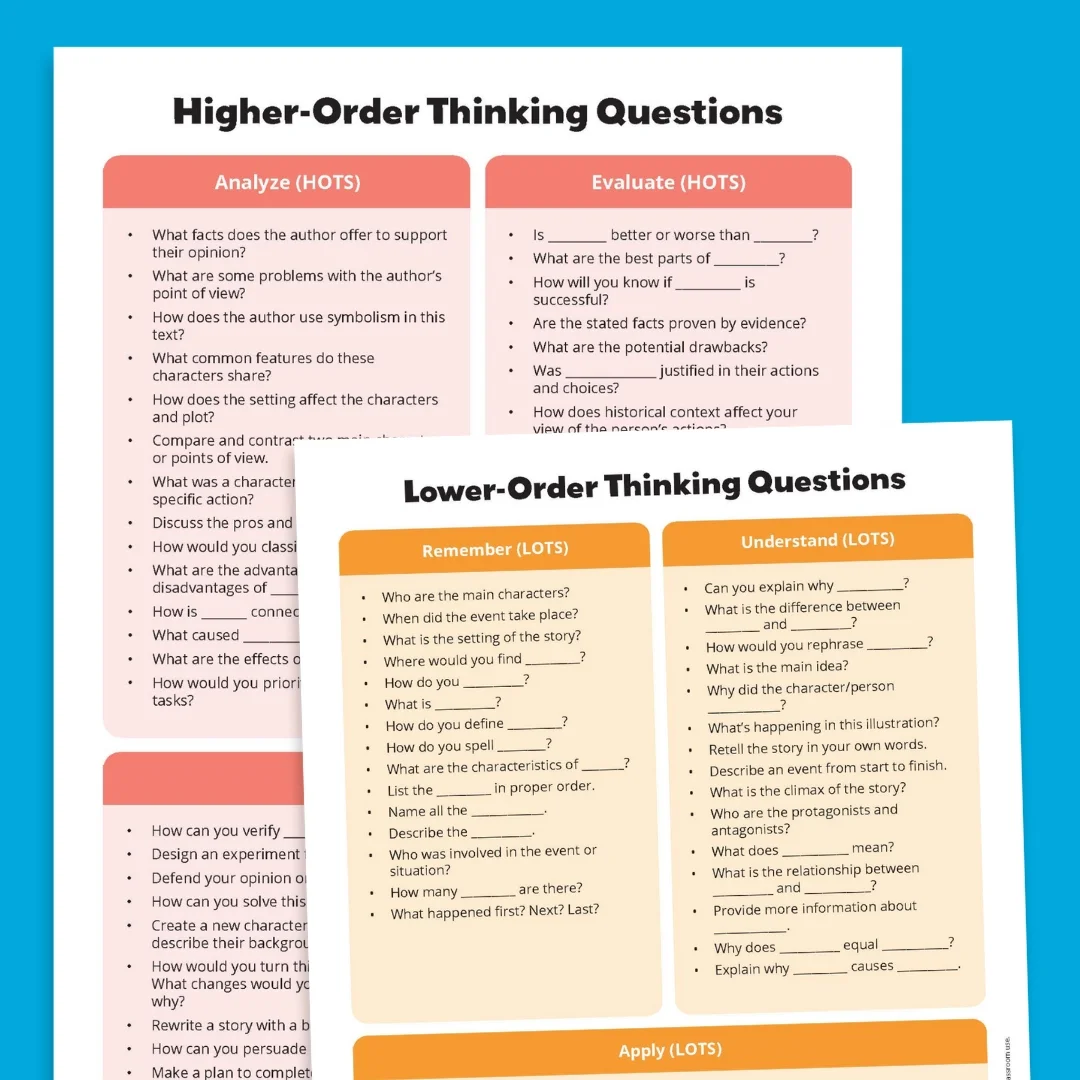
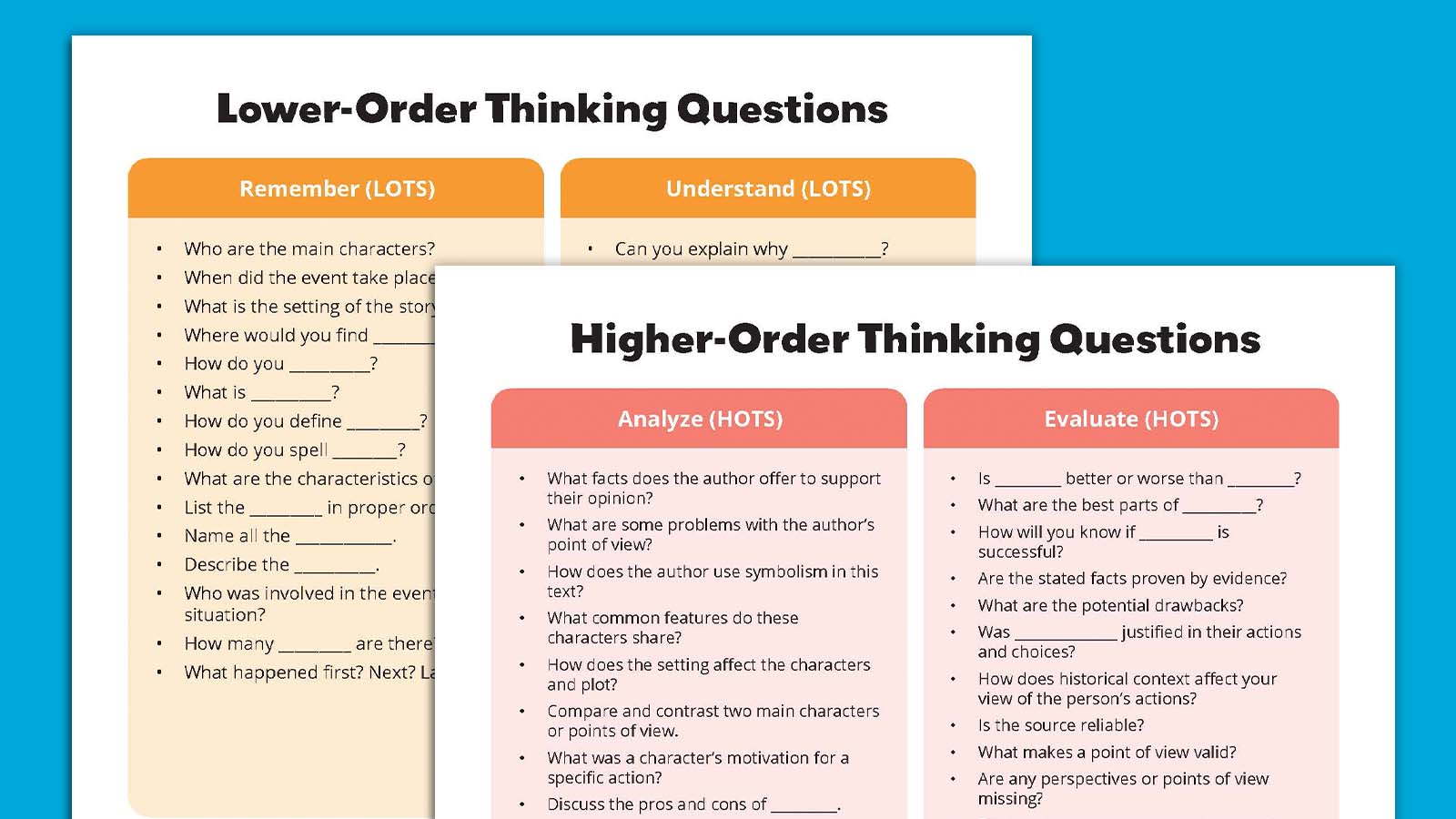
Free printable: Get the two-page set of lower- and higher-order thinking questions. Get the free printable.
Lower- and Higher-Order Thinking Skills Questions FAQs
What is Bloom’s Taxonomy?
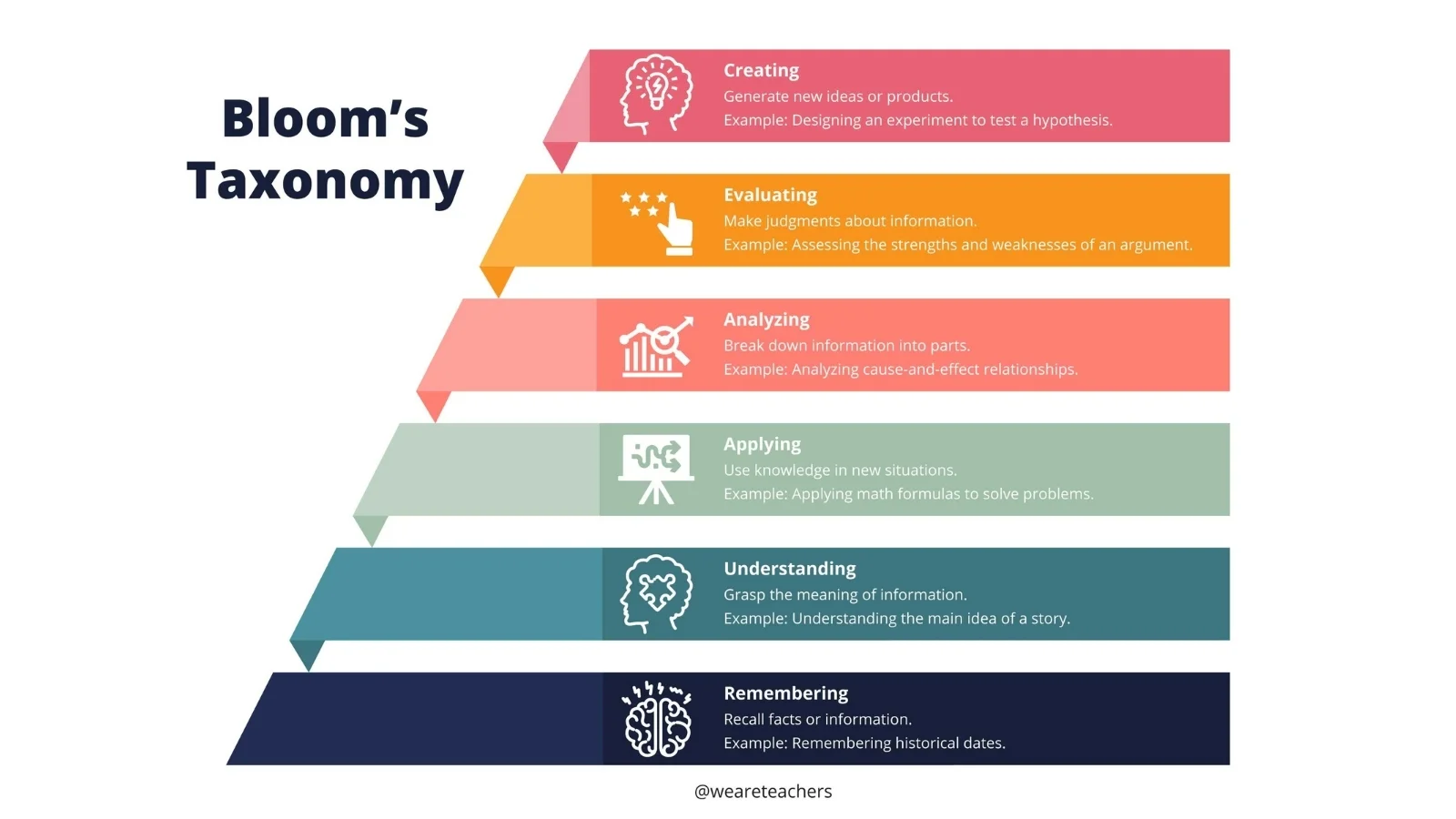
Bloom’s Taxonomy groups cognitive skills into six stages: remember, understand, apply, analyze, evaluate, and create. The first three are lower-order thinking skills, or LOTS; the final three are higher-order thinking skills, or HOTS. Teachers can use the categories to help students build connections with what they’re learning, starting with basic knowledge and moving toward more complex thinking.
What do LOTS and HOTS mean?
LOTS is short for lower-order thinking skills: remembering information, understanding it, and applying it. HOTS means higher-order thinking skills, also called critical thinking skills: analyzing, evaluating, and creating. Students need both. Foundational knowledge supports the deeper reasoning that comes later.
What are lower-order thinking questions?
These questions ask students to retrieve information and show that they understand the basics. Prompts such as “What is …?”, “Who …?” and “Can you list …?” give students a way to identify, define, list, or summarize material before they tackle more demanding questions.
What are higher-order thinking questions?
Higher-order questions ask students to connect ideas, explain their reasoning, and work through problems. “What would happen if …?” and “Compare and contrast …” are common starting points. Read more about teaching higher-order thinking.
Is higher-order thinking more important than lower-order thinking?
Neither can do the whole job alone. Students need to remember information and understand what it means before they can examine it, judge its strength, or use it to make something new. Teachers should make room for both kinds of thinking: the foundational work and the analysis built on top of it.
Lower-Order Thinking Skills Questions
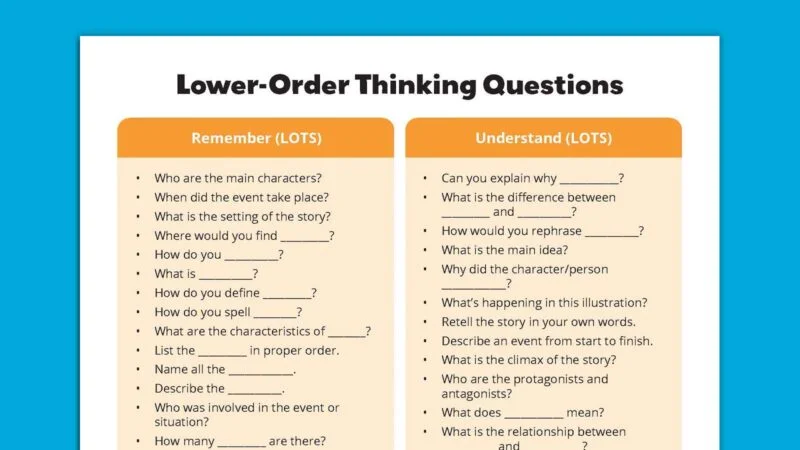
Remembering, understanding, and applying sit at the base of Bloom’s Taxonomy. “Lower-order” describes their position in the framework; it doesn’t make them disposable. Students need these skills to build a store of knowledge and use it as a starting point for more demanding work.
How can I use lower-order questions in class?
Use them during a read-aloud or as journal prompts when students need to recall details, find a main idea, or sum up what they’ve learned. After a math or science lesson, students can name the steps they followed, label parts, or describe what they observed during an activity.
Remember (LOTS)
- Who are the story’s main characters?
- When did the event happen?
- Where does the story take place?
- Where can you find _________?
- How do you __________?
- What is __________?
- How would you define _________?
- How do you spell ________?
- What traits or features describe _______?
- Put the _________ in the correct order.
- Name each of the ____________.
- Describe the __________.
- Who took part in the event or situation?
- How many _________ are there?
- What happened first, next, and last?
Understand (LOTS)
- Can you explain why ___________?
- How are _________ and __________ different?
- How would you say __________ in your own words?
- What is the central idea?
- Why did the character or person ____________?
- What is taking place in this illustration?
- Tell the story again in your own words.
- Describe an event from beginning to end.
- What is the story’s climax?
- Who are the protagonists and antagonists?
- What does ___________ mean?
- How are __________ and ___________ related?
- What else can you tell me about ____________?
- Why does __________ equal ___________?
- Explain how _________ leads to __________.
Apply (LOTS)
- How would you work out ___________?
- What approach could you use to __________?
- Which methods or approaches would fail here?
- Give examples of _____________.
- How could you show that you can __________?
- How would you put ___________ to use?
- Apply what you know to __________.
- How many different solutions can you find?
- What can ___________ teach you?
- Where might you use ________ in everyday life?
- Which facts support the claim that __________?
- Arrange the information to demonstrate __________.
- How might this person or character respond if ________?
- What do you predict would happen if __________?
- How could you find out _________?
Higher-Order Thinking Skills Questions
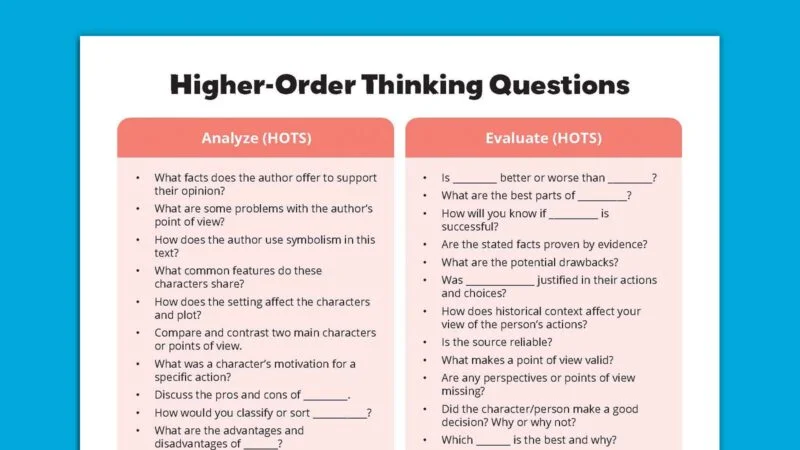
Analysis, evaluation, and creation make up the top three levels of Bloom’s Taxonomy. They’re also known as critical thinking skills. Students use them to ask why a claim should be believed, trace cause and effect, judge evidence, and combine what they know into a new idea or invention.
HOTS questions can work in any subject. They ask students to show their reasoning, draw conclusions from information, and connect concepts. The point isn’t just to get an answer; it’s to make the thinking behind that answer visible.
How can I use higher-order questions in class?
Try them during read-alouds, or use them to start a journal entry or essay. In math and science, they can follow a hands-on activity or experiment, giving students a chance to explain their choices and interpret what happened. Teachers can use these prompts at every grade level.
Analyze (HOTS)
- Which facts does the author use to back up their opinion?
- What weaknesses do you see in the author’s point of view?
- What role does symbolism play in this text?
- What traits do these characters have in common?
- How does the setting shape the characters and plot?
- What might have motivated the character to take a particular action?
- Compare two main characters or viewpoints. Where do they differ and overlap?
- What are the benefits and drawbacks of _________?
- How would you group or classify ___________?
- What are the strengths and weaknesses of _______?
- What links _______ to __________?
- What brought about __________?
- What followed from ___________?
- Which facts or tasks should take priority?
- How can you account for _______?
- What patterns appear in the data, and what could they indicate?
- Which way of solving this equation takes the least effort?
- What conclusions can you draw from the chart or graph?
- What does the data reveal, and what can’t it tell you?
- What motivated a character to take a particular action?
- What theme runs through _________?
- What leads you to think _______?
- What is _________ meant to do?
- Which moment changed the course of events?
- What recurring patterns can you spot?
- What evidence backs this conclusion?
- What evidence could undermine this conclusion?
- What assumptions sit behind this argument?
Evaluate (HOTS)
Evaluate ideas, then build something new
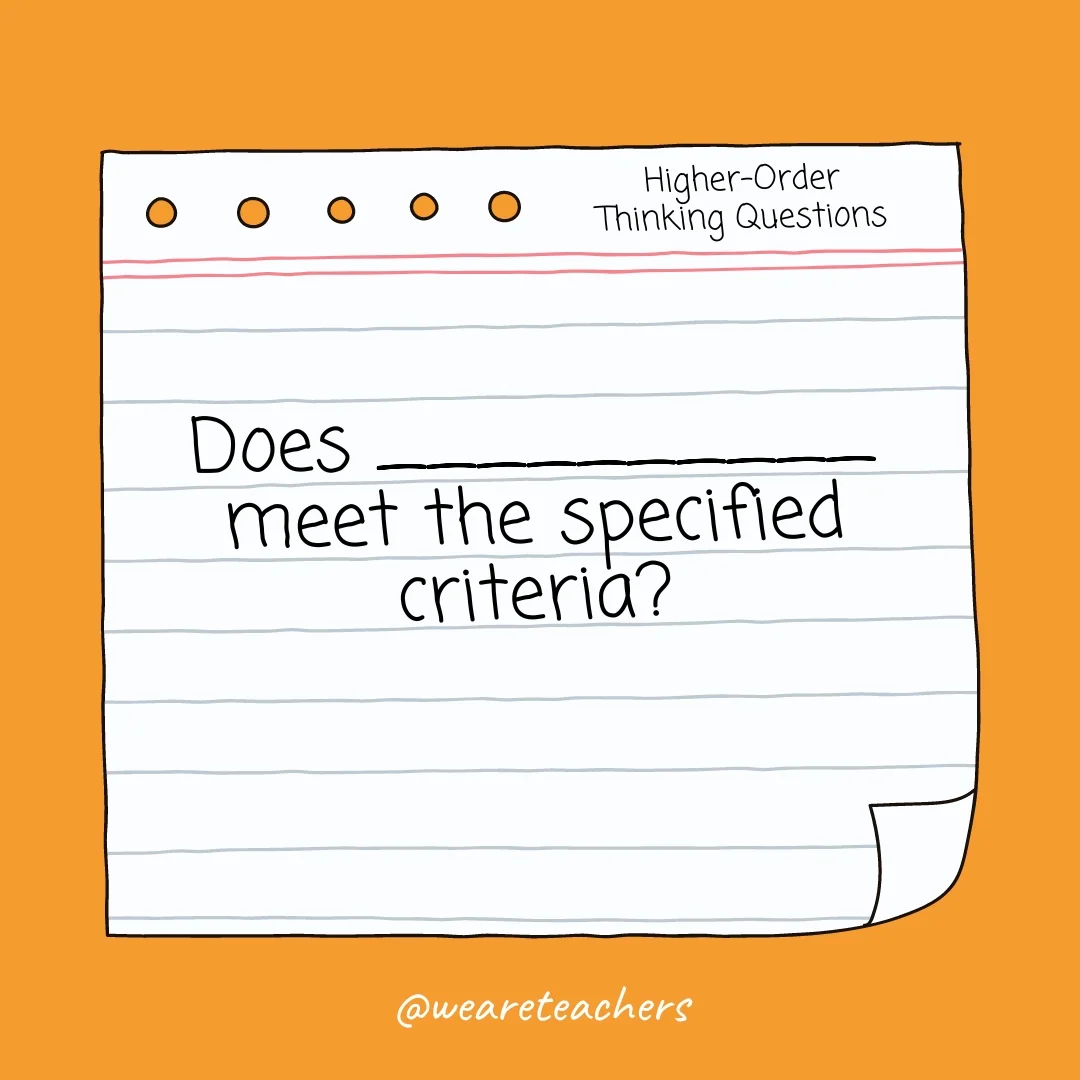
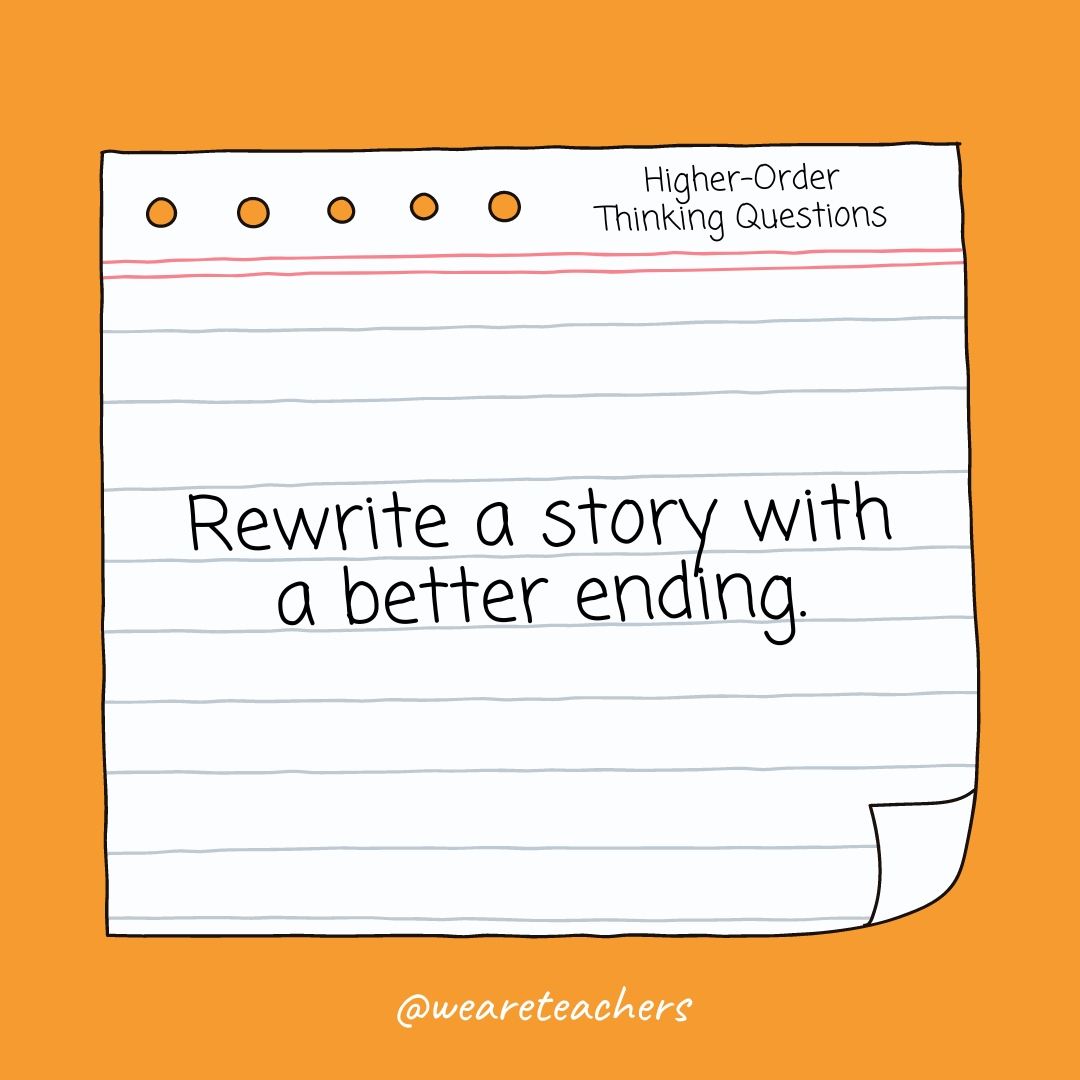
Critical thinking becomes visible when students have to judge evidence, weigh consequences, and explain their standards. Ask whether a comparison is fair, a claim is supported, a source is reliable, or a policy meets its goals. Push further: Whose perspective is missing? What assumptions shape the argument? Is a decision ethical, fair, and effective? These questions work across subjects, from assessing a character’s choices to testing whether a solution satisfies clear criteria.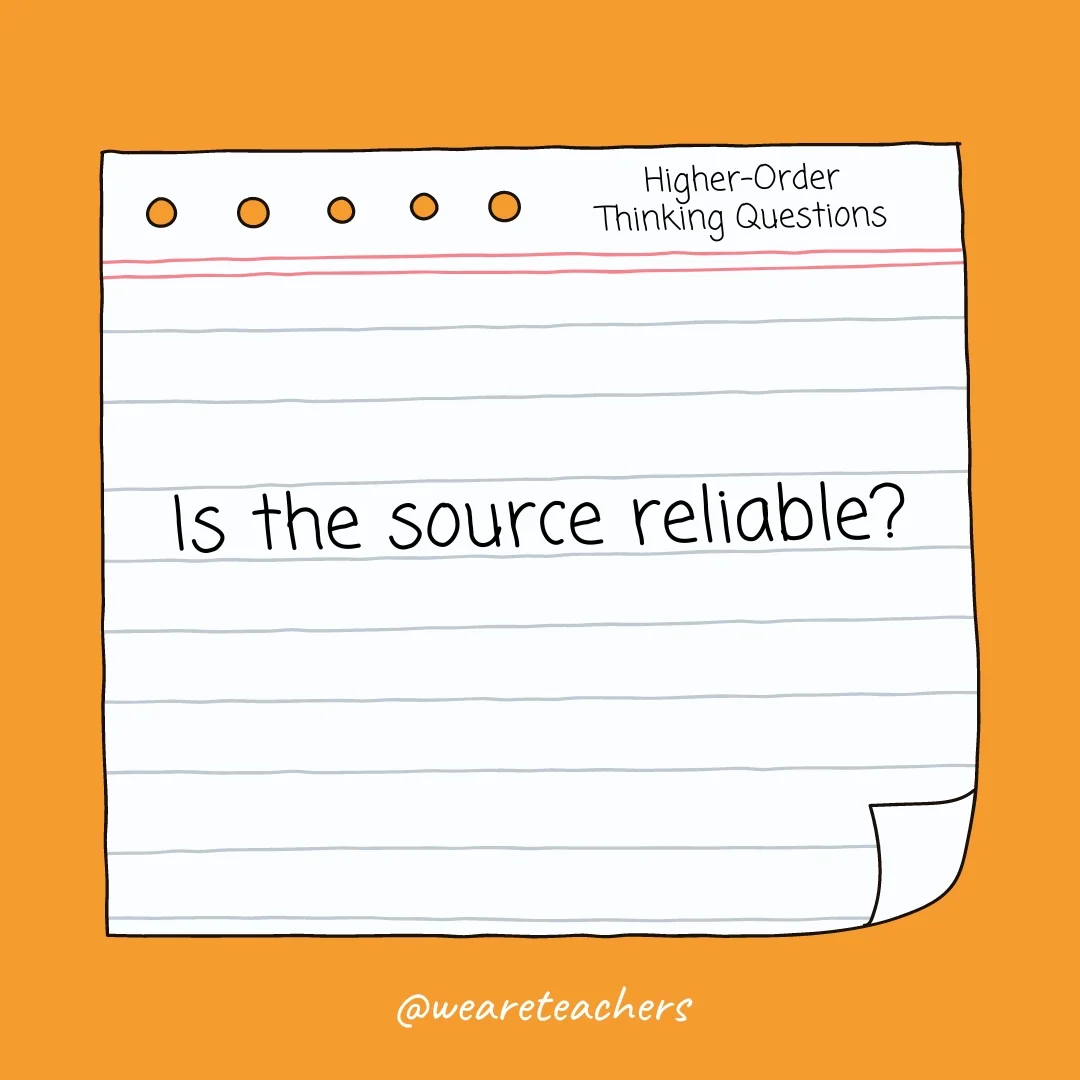 The next step is creation. Have students verify a claim, design an experiment, propose a solution, or defend an opinion with evidence. They can rewrite a story’s ending, invent a character, adapt a plot for film, draft a policy, or plan how to reach a goal. The strongest prompts leave room for different answers while requiring students to explain their choices.
 Here’s the thing: a good prompt doesn’t do the thinking for students. It gives them a reason to test an idea, consider alternatives, and decide what they’d change. Ask what the next steps should be, how a process could work better, or what new question the topic raises.
Keep the questions close at hand
A printable collection of higher order and lower order thinking questions can help with lesson planning and classroom instruction. Keep it nearby and choose prompts that fit the task at hand.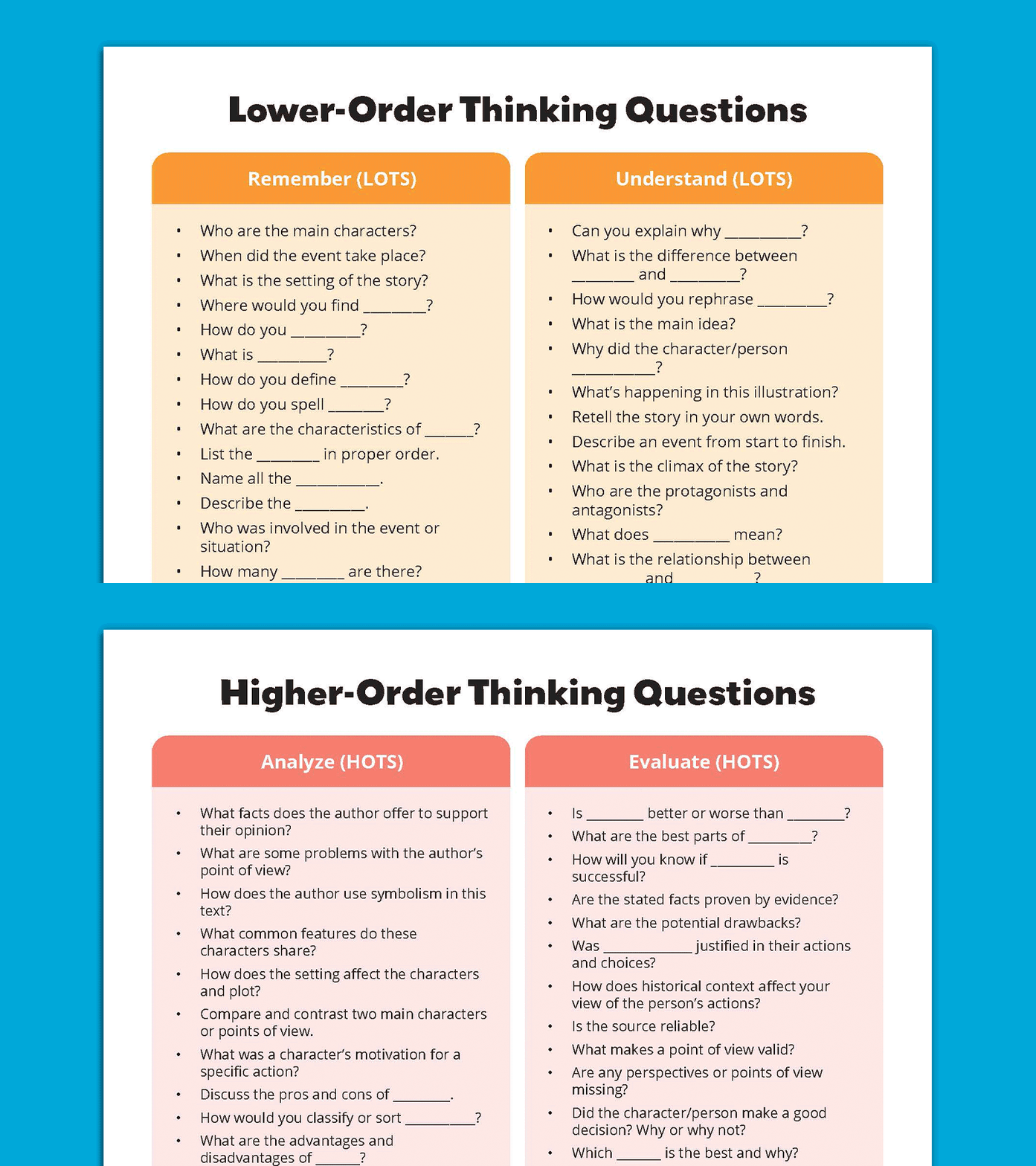
 If you have a favorite higher order thinking question, share it in the [We Are Teachers HELPLINE group on Facebook](https://www.facebook.com/groups/weareteachershelpline/). For more prompts students can use across subjects, see [100+ Critical Thinking Questions for Students To Ask About Anything](https://www.weareteachers.com/critical-thinking-questions/).
Discussion
Sign in to join the discussion.