A Sunday cleanup rarely survives the week. The setup is often the real problem, and a short, shared reset routine can make the room stay usable.
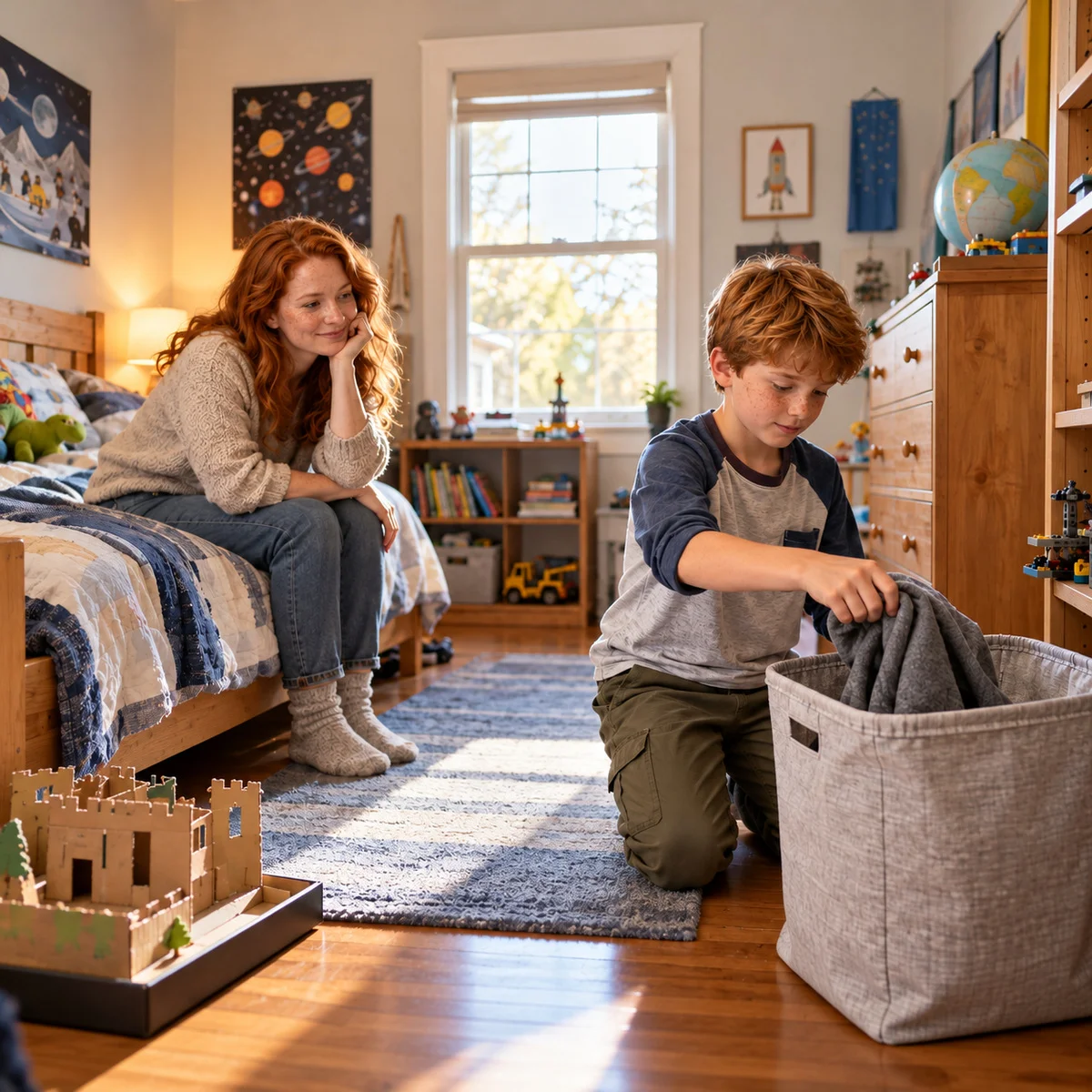
A Sunday cleanup feels like a win. The floor is visible, the laundry is in its basket, and you might even pause in the doorway to admire it. By Thursday, the carpet has disappeared again. Before you decide your child has stopped caring, look at the setup. A weekend reset and a weekday room ask for very different things.
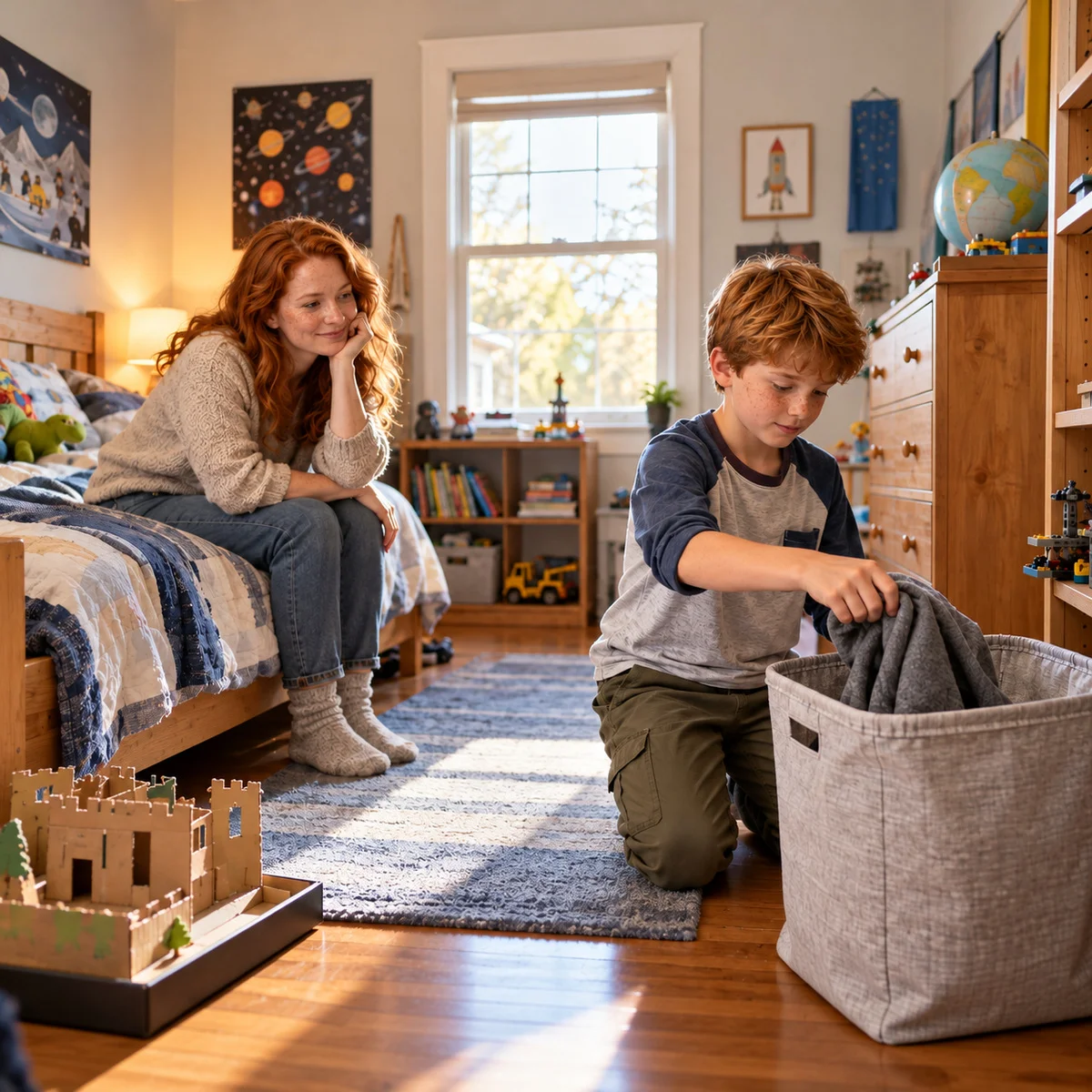
Here's the core issue: a weekend tidy-up works because an adult is there to notice what's out of place, decide where it goes, and keep things moving. During the week, your child has to handle those same jobs alone, squeezed between homework, friends, and a cardboard project that can't be put away yet. The room doesn't need to look perfect. It needs to stay usable: a clear path, a bed that can be slept in, and a way to find things.
Agree on what "usable" actually means
Start by naming the non-negotiables. Is food leaving the room? Is the bed free for sleep? Can someone walk to the door without stepping on something? Are dirty clothes contained? A few specific expectations beat a vague demand. "Dishes go back to the kitchen and dirty clothes go in the hamper before bed" gives a kid something to act on. "Keep your room clean" doesn't. You can hold firm on hygiene and safety and still let your child shape how the space looks.
Then ask where they get stuck. Can they reach the shelf? Does the art supply bin have an obvious spot? If clean clothes spill back out of an overstuffed dresser, that's useful information. A pile on the floor often signals that the designated spot doesn't work, not that a child doesn't care. If there are simply too many possessions for the space, make the cuts together. This ten-minute approach to decluttering with kids keeps that conversation short and less charged.
Put storage where the stuff actually lands
Watch where things end up. If clothes come off beside the closet every night, the hamper belongs there. If books pile up by the bed, a small shelf or basket within arm's reach will do more than a rule about reading in the living room. A tray for a project in progress can save a lot of rebuilding. Every extra step, like carrying an object across the room, lifting a heavy lid, or sorting into a narrow category, makes put-away less likely. Look for those steps together and cut what you can.
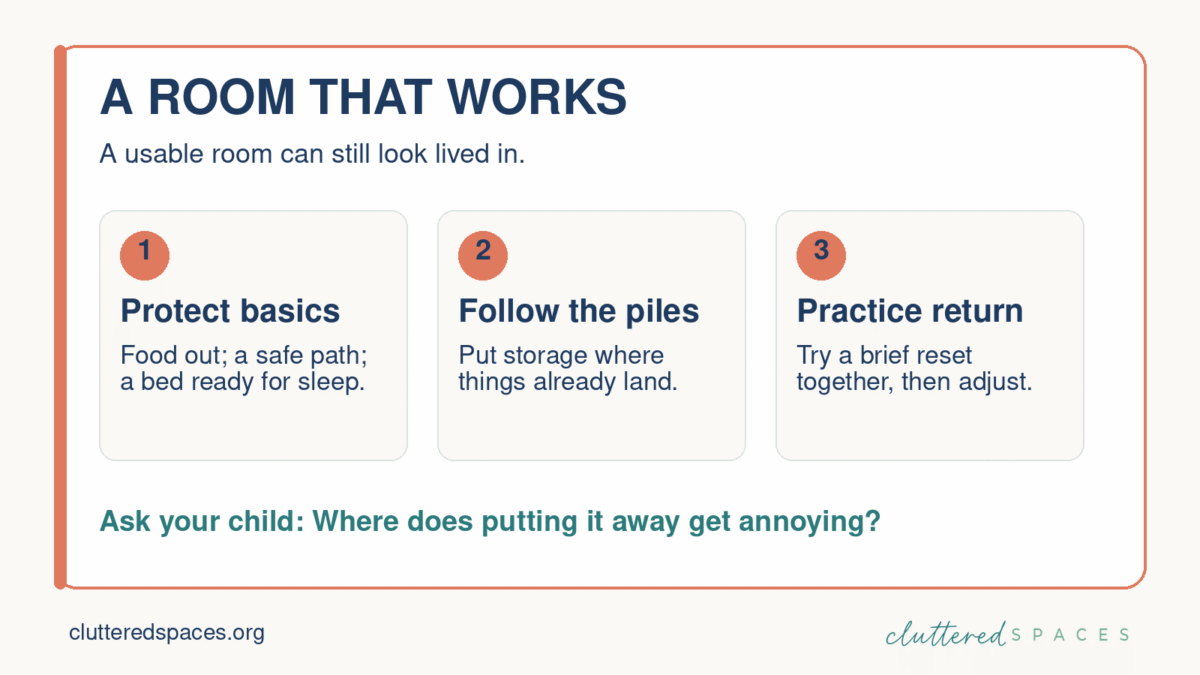
Then test the spots. Ask your child whether a location works for the things they actually use: "Want to see if this place works for the stuff you use?" Each of you puts something away and notes what feels awkward. Maybe the bin sits too high, or "craft supplies" has no clear label. Some kids want to see their belongings. Others prefer them tucked out of sight. Ask which one they prefer. Before you buy more containers, check the setup against an ordinary week using this guide to whether a home system will hold up. It helps you spot steps that quietly depend on someone remembering, prompting, or making every decision.
Leave room for what your child cares about. A collection on display or a half-finished invention signals that they feel ownership of the space, not just a messy corner. Offer a shelf for the collection and a parking spot for the project. You may still disagree about whether seventeen stuffed animals deserve the good pillow. That argument is easier to have when you're talking about space instead of repeating "just put it away."
Build a short reset and practice it
Most kids need repetitions before a routine sticks, especially if an adult has been handling the room until now. Pick one short reset at a predictable moment, such as after pajamas go on or before a favorite Friday activity. Do it side by side at first. Food and dishes leave, laundry goes in the hamper, and the bed or walking path gets cleared. Stop when those essentials are done. Your child learns the sequence before you expect them to spot every stray sock on their own.
Some weeks will be rough. On those, the minimum is enough: food out, path clear. Spell out when the rest happens. Something like "Tonight we clear the path; Saturday after breakfast we'll reset the clothes together" makes the plan concrete. Name who owns the next step, too. A hamper only helps if someone empties it. If nobody has time for laundry, that's a planning problem, not a character flaw. Decide who starts the wash and what help is available. If the plan keeps slipping, look at the steps and the load before asking for more effort.
Run the revised setup for a week. You may need to move the hamper, free up a drawer, and practice the reset a few times. Connected problems often need connected changes. At the check-in, ask what felt easier and what still feels clunky. A Thursday room may still look lived in, and that's fine. Finding clothes, getting into bed, moving safely, and having a way back after a hard week are the signs the system is working.
Cynthia Rusincovitch is a home function and executive function coach and the founder of Cluttered Spaces, where she helps families build routines and home systems that fit the people using them.



Discussion
Sign in to join the discussion.