A new documentary revisits the Toronto Godspell production that brought Gilda Radner, Eugene Levy and Martin Short together before their comedy careers took off.

A Toronto production becomes a shared origin story
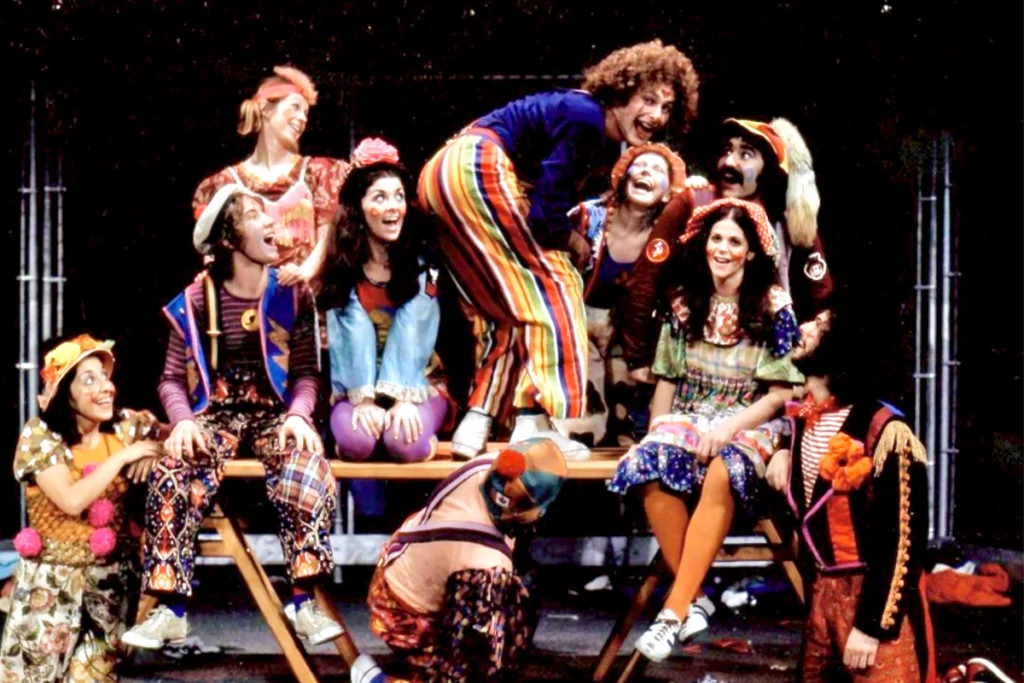
The Toronto cast of Godspell brought together performers who would help define modern comedy. A new documentary, You Had to Be There, argues that the 1972 production was more than a career launchpad: it was a creative community whose energy still comes through in surviving recordings and in the memories of its members. That distinction matters. A list of future stars can make an old production sound inevitable, while the film presents their gathering as a contingent meeting of people still trying to find their footing.
Directed by Nick Davis and executive produced by Judd Apatow, the film traces how Victor Garber, Eugene Levy, Gilda Radner, Martin Short, Andrea Martin and musical director Paul Shaffer converged at open auditions for the show at Toronto’s Royal Alexandra Theatre. They were in their 20s and working to establish themselves in entertainment, without knowing what the cast would eventually mean to their careers or to comedy. The production’s mixture of talent and chance put them in the same room. The documentary’s central question is less how each performer became famous than what happened when their different instincts met in one company.
A comedy ensemble inside a Jesus musical
The premise has an unlikely edge: a musical about Jesus and his disciples, staged as clowns, became a meeting point for several Jewish performers who would later become comedy fixtures. The film doesn’t treat that combination as a contradiction that needs to be explained away. Levy recalls that he didn’t see the role as a problem for a Jewish actor; the scene in which the disciples lift Jesus’ body after the crucifixion struck him as “really great theater.” His recollection points to the production’s practical focus: the performers were responding to the scene in front of them, and to what it asked them to do onstage.
That approach gives the documentary room to consider religious material as performance without claiming that the cast shared one response to it. In Godspell, clowning and music made the story available for a theatrical interpretation that could be playful and emotionally direct at the same time. The Jewish identities of several cast members add context to the production’s later place in Jewish comedy history, but the film’s account rests on their experiences and recollections, not on a tidy theory of why they were funny together.
The cast’s chemistry is central to the documentary’s argument. Composer Stephen Schwartz remembers the Toronto company as the funniest Godspell cast. Comedian Dave Thomas, who watched opening night before later joining the production, singles out the performers’ distinct strengths: Andrea Martin’s work, Short’s explosive energy, Levy’s deadpan delivery and Garber’s gentle presence as Jesus. Those qualities aren’t interchangeable. The recollections suggest that the company’s comic effect came from contrast as much as from individual talent.
That range helps explain why the production became such fertile ground. Comedy ensembles depend on timing, listening and the ability to leave room for another performer’s choice; a musical adds the demands of structure and repetition. The documentary draws on interviews with the original cast and creative team, archival footage and recordings, and whimsical animation. Rather than presenting a polished origin story, it lets the performers’ accounts retain the surprise and looseness of an experience they couldn’t have understood in full at the time.
What the recordings can still show
The most vivid evidence comes from the cast members themselves. Short’s illicit audio recordings preserve the show’s pace and comic charge, giving viewers a sense of how the material played in performance. Audio can’t show a gesture, a look or how the actors occupied the stage, but it does preserve something a later account can flatten: rhythm. The comedy is there in the sound of the show unfolding.
A brief clip of a costumed rehearsal offers something rarer: the only surviving video excerpt from the production. It’s a glimpse of the ensemble at work rather than a description of it, though its brevity limits what it can establish. The film can point to the cast’s movement and presence, then turn back to testimony for the larger picture. That gap between the fragment and the memory is part of the documentary’s subject.
Godspell itself wasn’t filmed, so You Had to Be There can’t recreate the experience of seeing the show in 1972. It has to build an account from incomplete materials. That constraint gives the recordings unusual weight, but it also asks viewers to accept recollection as the main guide to a production that can no longer be watched in full. Here’s the thing: a surviving fragment can make an old performance feel close, while still leaving most of it out of reach.
Memory, reunion and the production’s legacy
The film’s closing reunion shifts the mood. The surviving cast members gather for a private sing-along, and the shared history becomes palpable. It’s a simple scene, but it changes the scale of the story: the documentary has been tracing careers and a notable production, then arrives at the relationships that lasted beyond the show. The moment doesn’t prove that every memory of the production is complete or identical. It shows what the group can still share.
This is more significant than it looks. The cast’s later prominence can make the Toronto production seem like a carefully assembled starting point, when the film’s evidence points to something less orderly: an open audition, a particular mix of performers and a creative atmosphere that participants remember as unusually alive. That distinction keeps the story from becoming a victory lap for careers already known to the audience.
Why the story still resonates
The documentary’s strongest case is also its most modest one. It doesn’t offer a complete record of Godspell in Toronto; it shows how recordings, testimony and a reunion can make a vanished performance partially legible. The cast’s eventual influence gives the material historical interest, but the film’s attention to their working chemistry gives it a human scale. And yet, viewers are left with a useful tension: the memories are vivid, while the show itself remains largely unseen.
If you’re working in comedy or theater, the production’s story offers a reminder that an ensemble’s impact can exceed what any one performer brings to it. The documentary connects that idea to a specific group without claiming that the same chemistry can be manufactured on demand. One room, one run of a show, one set of recordings. That’s the evidence.
For viewers interested in Jewish comedy history, You Had to Be There also places a group of Jewish performers inside a work drawn from Christian scripture, while allowing the cast’s own accounts to carry the point. It doesn’t need to turn that fact into a grand explanation. The show’s unusual premise, the performers’ different comic styles and the surviving traces of their work are enough to make the convergence worth revisiting (and this is the part most people overlook).


Discussion
Sign in to join the discussion.