A free classroom activity assigns students cleanup missions and helps teachers track supply shortages and maintenance needs.
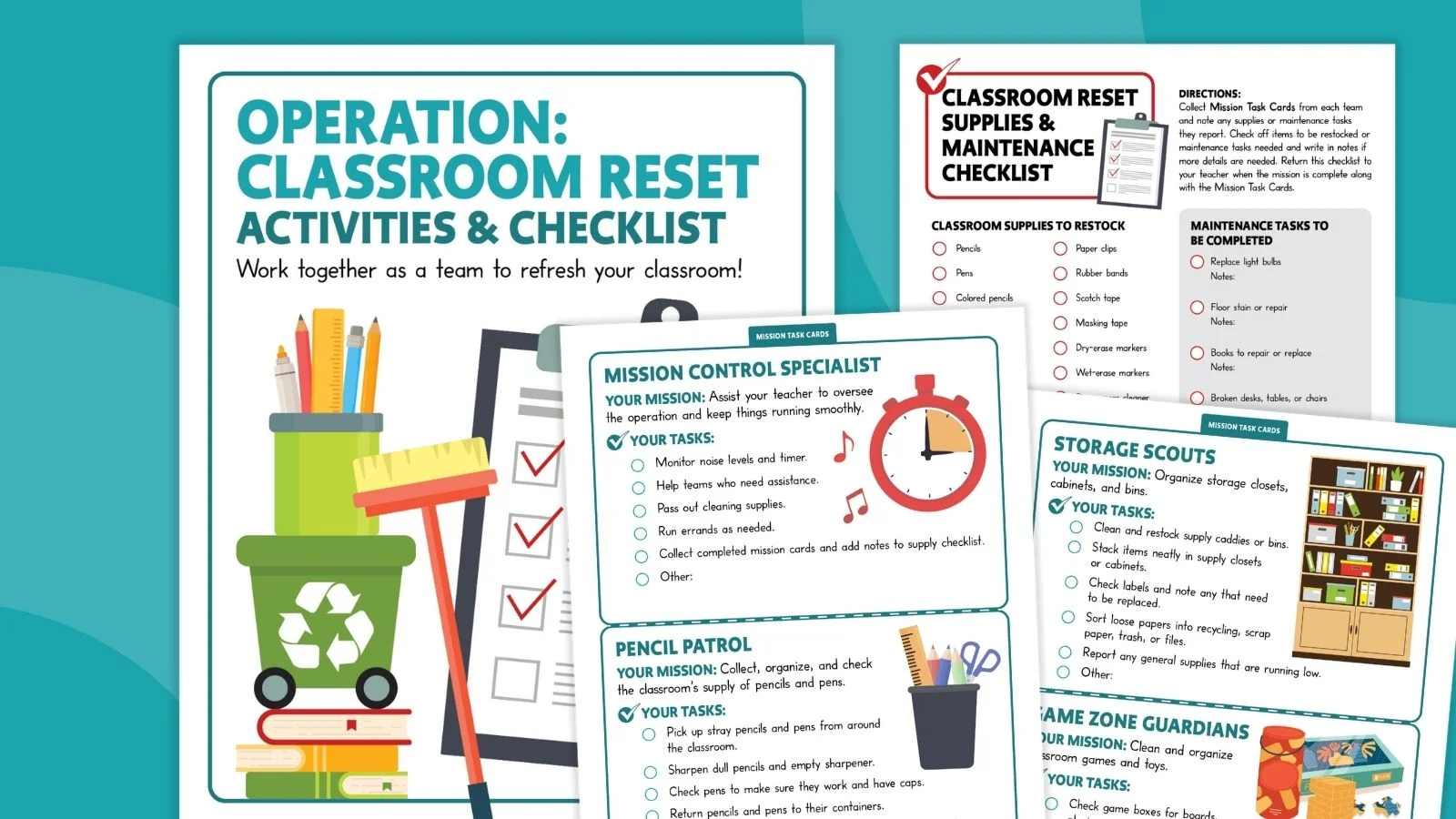
Classroom cleanup can do more than restore order. Operation: Classroom Reset turns it into a team activity while giving teachers a practical way to spot low supplies and maintenance needs. That makes the routine useful for two jobs at once: students help put the room back in shape, and the teacher gets a clearer list of what needs attention.
The free printable set includes a teacher guide, mission task cards, and a Classroom Supplies & Maintenance Checklist. Students take on specific jobs, then record items that need restocking or attention. The setup gives a familiar chore a defined purpose, which can help students see that looking after classroom materials is part of using them.
What’s in the printable set
Teacher guide
The guide outlines how to prepare the activity, run it with students, and follow up on supply orders or classroom repairs. That follow-up matters: a list of shortages is only useful if someone can review it and decide what to do next. Teachers can use the guide to make that step part of the activity rather than treating cleanup as finished when the room looks tidy.
Mission task cards
Divide students into teams and assign each a card with a defined set of tasks and space to note shortages or maintenance concerns. Teams include Pencil Patrol, Tech Team, Art Supply Crew, Storage Scouts, and Furniture Troops. Giving teams separate assignments can make a broad cleanup feel more manageable, while the written notes create a record of problems students encounter along the way.
The team format also gives students a concrete role in caring for shared materials. A group checking art supplies, for example, can flag what’s running low; another focused on furniture can record something that needs attention. The cards turn observation into part of the job. That’s more useful than asking a whole class to “clean up” and leaving each student to guess what that means.
Supplies and maintenance checklist
Use the checklist to collect items that need ordering and jobs that can be handled later. It can be printed or completed electronically. Keeping supply requests and maintenance concerns in one place can help teachers distinguish between routine restocking and work that needs follow-up, instead of relying on memory after the class has moved on.
Making the reset work
Run the activity when the room needs attention: at the end of a week or month, before a school break, or after a project that leaves a mess. The mission framing gives students a clear purpose and makes shared cleanup easier to organize. It also gives teachers a reason to schedule the work, rather than waiting until clutter becomes difficult to manage.
Music can set the pace; a spy soundtrack, such as music from Mission: Impossible, fits the theme. For a recurring reset, use a stopwatch to see whether teams can improve their time while completing tasks carefully. Another option is a 10-minute timer, with the class aiming to finish before it rings. Speed can make the routine lively, but it shouldn’t become the only measure of success: teams still need time to notice shortages and report problems accurately.
Here's the thing: a cleanup game works best when the tasks are clear and the follow-up is real. If you're working in this space, you’ll want to make sure students know where to record an issue and what counts as something that needs attention. Otherwise, the activity may produce a cleaner room without giving the teacher much useful information.
What the activity can reveal
The printable’s value extends beyond a tidier room: students help surface the small supply and upkeep issues that might otherwise go unnoticed. This is more significant than it looks. A missing classroom item may be easy to overlook during a busy day, while a problem noticed during a focused team task can be written down for later review (and this is the part most people overlook).
That said, the checklist is a way to gather observations, not a guarantee that every request can be handled immediately. Teachers still have to review what students report, decide what needs attention, and follow up on orders or repairs. The activity can make that work more visible and organized. A useful reset, then, leaves behind both a more orderly room and a record of what the room needs.
One clear task at a time.
Close with a class cheer, a short dance break, or another shared celebration. Marking the end of the reset gives students a moment to recognize the shared effort and can help make the routine feel complete. If the activity returns regularly, that simple close can reinforce that classroom care is ongoing work, not a one-off response to a mess.


Discussion
Sign in to join the discussion.