Explore motion, air pressure, density, buoyancy, and the human body with 11 engaging balloon science activities for students.
Balloons make useful science equipment because the same cheap classroom staple can demonstrate chemical reactions, motion, air pressure, biology, and more. The strongest activities here put a visible result in front of students, then give them a reason to ask what caused it. If you’re planning a lesson or a science party, a dollar-store pack can go a long way.
Motion, pressure, and air
1. Inflate a balloon with a chemical reaction
Mix an acid and a base and watch the reaction produce gas that fills a balloon. It’s a familiar classroom demonstration, but the balloon makes an otherwise invisible chemical change easy to see.
2. Build a balloon-powered car
Have students design, build, and test cars propelled by escaping air. The trial-and-error is the point: they can explore motion while making creative choices about their designs. Recycled materials add a practical constraint. Find more classroom car activities here.
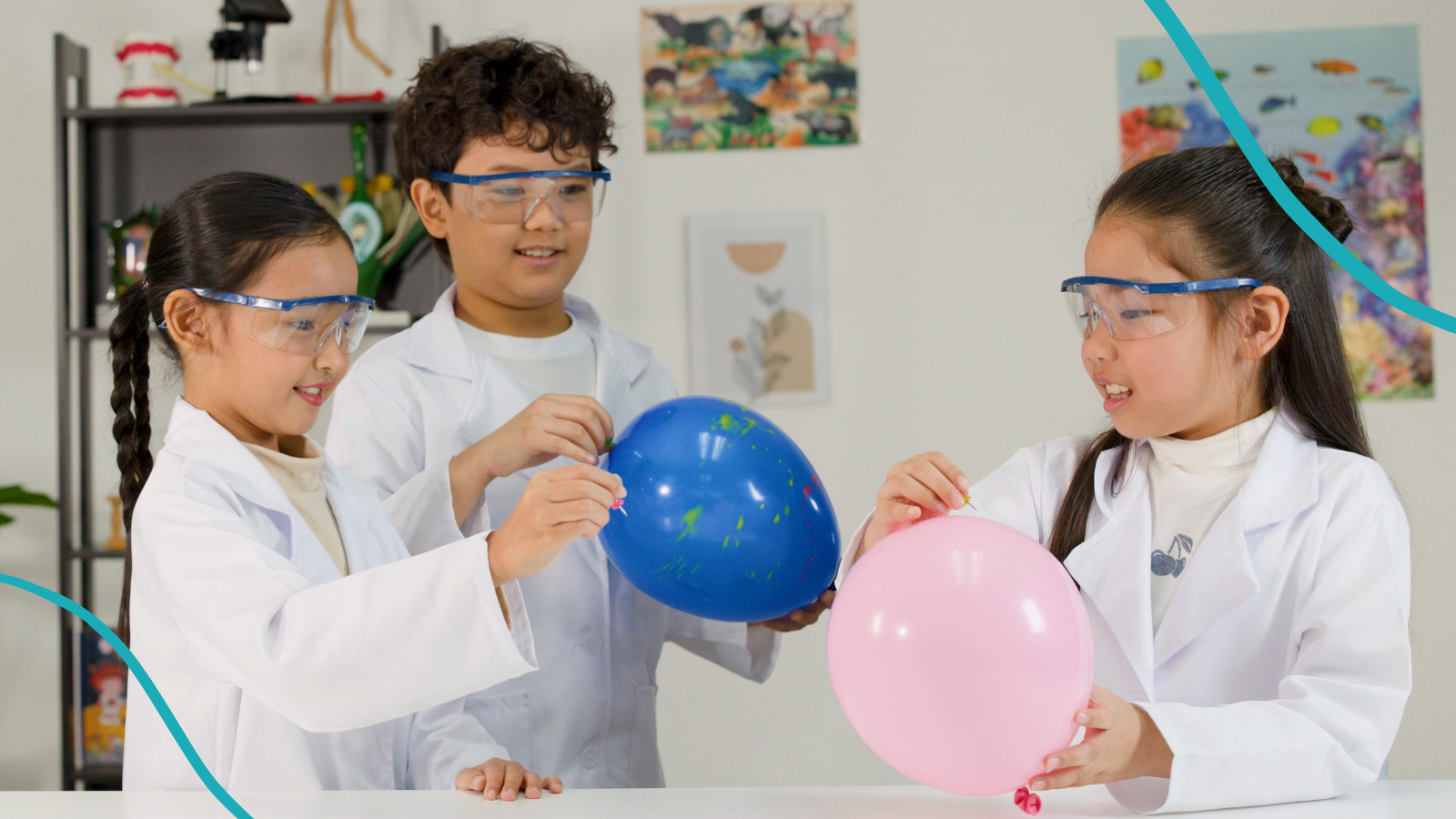
3. Push a skewer through a balloon
A carefully placed skewer can pass through a balloon without bursting it. The surprising result offers a way to discuss the polymers in balloon rubber—and how the material behaves under pressure.
4. Make a boat move with a balloon
A balloon-powered boat turns escaping air into motion, connecting air pressure with Newton’s third law. It’s inexpensive and particularly suited to an outdoor activity where students can test their boats in water.
5. Model a two-stage rocket
Space rockets use multiple stages to gain the boost needed for flight. A balloon model gives students a hands-on way to explore how staged propulsion relates to the laws of motion.
6. Build a simple hovercraft
An old CD and a balloon are enough to make a small hovercraft that demonstrates air pressure and friction. It won’t resemble a military vehicle, but the simple setup makes those forces easier to observe.
7. Slow a water balloon with a parachute
Attach a homemade parachute to a water balloon and watch how air resistance affects its descent. The landing is memorable; the useful lesson is how drag can slow a falling object.
Water, floating, and changing states
8. Reveal ice crystals inside a balloon
Fill balloons with water and leave them to freeze overnight. Carefully remove the balloon the next day to expose the ice inside. Students can examine crystallization and the expansion that occurs as water freezes. Explore more experiments with ice and snow.
9. Test density with water balloons
Fill separate balloons with liquids such as oil, salt water, and corn syrup, then place them in a bucket of water. Their behavior gives students a concrete way to compare density and buoyancy.
10. Investigate how fish control buoyancy
How can a fish stay suspended instead of continually rising or sinking? A model made with a glass bottle, a balloon, and a few basic materials helps explain the role of a swim bladder in buoyancy.
Models of the human body
11. Make a working heart model
A balloon-based model can show how blood moves through the heart’s chambers and valves. It gives an anatomy lesson a visible mechanism to study.
12. Demonstrate how lungs fill
Lungs don’t have muscles that pull air in by themselves. The diaphragm’s movement changes the space in the chest, drawing air in and pushing it out. A simple model can make that process easier to grasp.
A balloon puzzle
13. Connect two balloons and see what happens
Inflate two balloons to different sizes, then open the valve connecting them. Predicting which way air will move—and why—makes this a useful demonstration of gas pressure. The result can be counterintuitive, so let students make a guess before showing them the explanation.
More ways to make balloon science visible
These last experiments turn familiar balloons into quick demonstrations of forces, heat, and air pressure. The best ones invite students to predict the result first, then explain what they saw.
Static electricity and motion
Rub a balloon against your hair, then bring it near a compact fluorescent light bulb: the static charge can make the bulb glow. It’s a small effect, but a memorable way to make an invisible force visible.
For a lesson in motion, set a penny spinning inside a balloon. Students can try other objects and compare how long each one keeps turning, connecting the motion to kinetic energy and centripetal force.
Air pressure at work
A homemade air cannon sends an air vortex across the room. Add incense smoke to reveal the rings as they travel, making the movement easier to see.
A plastic bottle, straw, putty, and a balloon are enough to build a simple water fountain powered by air pressure. The setup also gives students a chance to ask how pushing air into a container can move water through a straw.
Heat, air, and pressure
Temperature changes can make the air inside a balloon expand or contract. Watch the balloon’s size shift as the surrounding air warms or cools, and use the visible change to discuss what’s happening inside.
A balloon with a little cold water inside can resist a flame long enough to demonstrate water’s ability to conduct heat. This experiment needs close adult supervision around fire.
And a bed of pushpins can surprise students: a balloon placed on many pins may hold up where a single pin would pop it. The explanation is distributed pressure—the force is spread across more points.
Have another balloon experiment to share? Join the We Are Teachers HELPLINE group on Facebook. For more classroom ideas, browse this collection of easy science experiments.


Discussion
Sign in to join the discussion.