Explore hands-on high school science projects that turn biology, chemistry, physics, and engineering topics into testable questions.
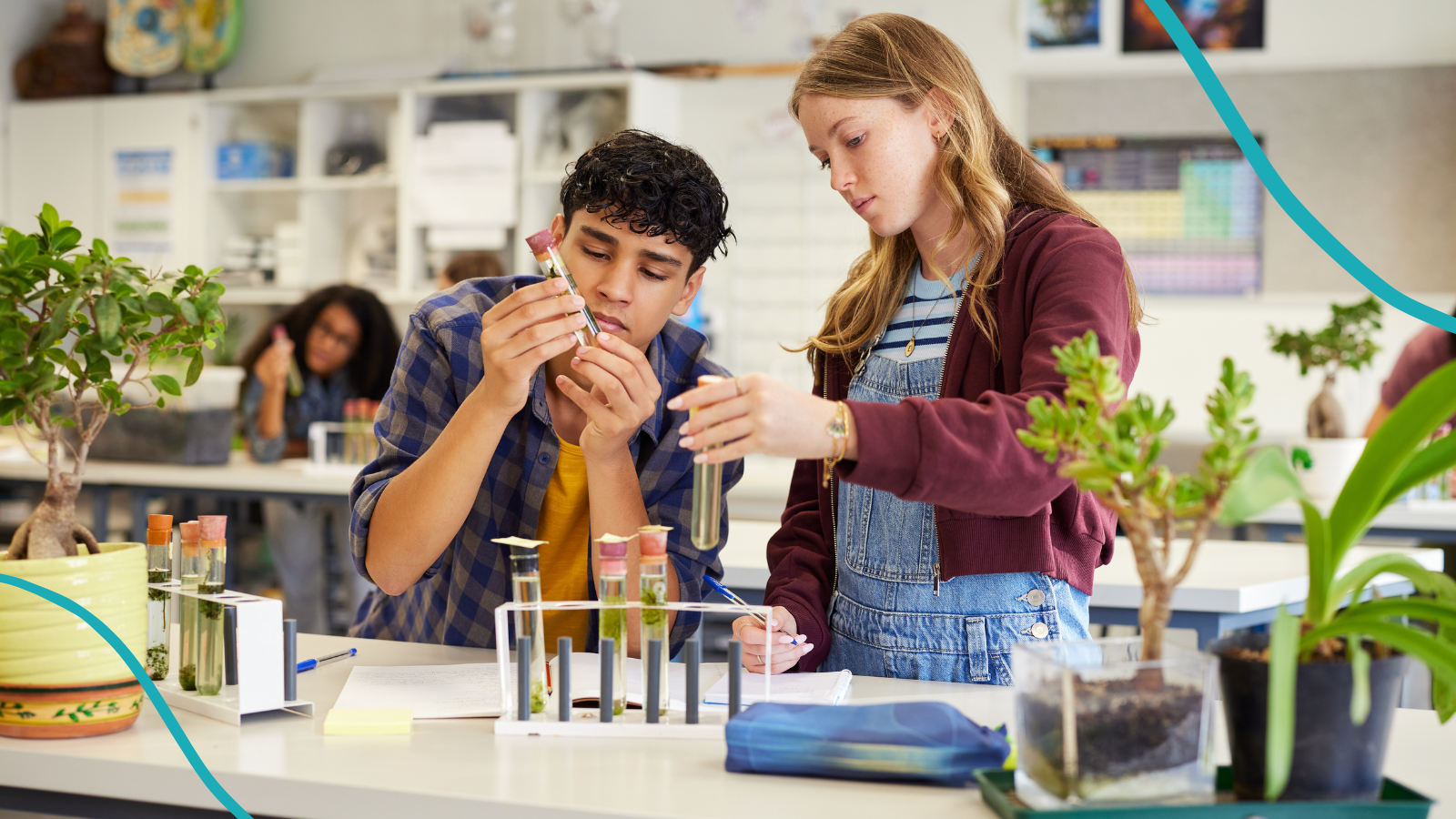
High school science projects are most useful when they ask students to do more than follow a recipe. The best ones turn a familiar idea into a testable question: change one condition, collect evidence, and see what the results support. That can mean adding measurements to a project students tried when they were younger, or working with materials that require more preparation and care.
These activities can work as classroom labs or science fair projects. Adapt them to a student’s question, or run one with the whole class; either way, decide which variable to change and keep the other conditions consistent. The project list covers biology, chemistry, physics, and engineering, with ratings to help match the work to the time and supplies available.
Difficulty
- Easy: Little or no preparation; suitable for a quick start.
- Medium: Requires some setup or more time to finish.
- Advanced: Calls for a substantial investment of time or effort.
Materials
- Basic: Uses common household or classroom items.
- Medium: Needs supplies that are easy to obtain but may not already be on hand.
- Advanced: Requires specialized or more costly equipment.
Choose a subject area:

Free printable: Download the Lab Report Template Slides to use with any of the experiments below by pressing the button and filling out the form.
Biology and Life Sciences High School Science Fair Projects
Biology offers a wide range of questions about plants, animals, and the environment. Several projects here become stronger when students compare conditions or extend a basic classroom demonstration into a controlled investigation.
Extract DNA from an onion
Difficulty: Medium / Materials: Medium
This experiment uses a modest set of supplies but produces a striking result. To turn it into a fair project, compare DNA extraction from onions with results from other fruits or vegetables.
Make plants move with light
Difficulty: Medium / Materials: Medium
Phototropism is the tendency of many plants to grow toward light. Students can test how light reaches a seedling by covering different parts with different materials and observing how its growth changes.
Test the 5-second rule
Difficulty: Medium / Materials: Medium
Does picking up dropped food quickly keep it safe to eat? A carefully designed experiment can examine how contact time relates to contamination. The question is catchy; the evidence depends on how consistently students control the test.
Find out if color affects taste
Difficulty: Medium / Materials: Medium
Does the appearance of food change how people judge its flavor? This project tests how sight and taste interact using a simple food science investigation.
See the effects of antibiotics on bacteria
Difficulty: Medium / Materials: Advanced
Students can identify gram-positive and gram-negative bacteria, then compare how different antibiotics affect them. The required materials include a gram stain kit, Bacillus cereus and Rhodospirillum rubrum cultures, and antibiotic discs, available from Home Science Tools.
Witness the carbon cycle in action
Difficulty: Medium / Materials: Advanced
Test how light affects the carbon cycle. Adding small aquatic animals such as snails or fish can add another dimension to the investigation.
Look for cell mitosis in an onion
Difficulty: Medium / Materials: Advanced
Under a microscope, onion root tips make cell division visible. Students can connect the process they learn about in class to cells in action, then adapt the investigation by examining other organisms.
Test the effects of disinfectants
Difficulty: Medium / Materials: Advanced
Grow bacteria in a petri dish and place paper disks soaked in different antiseptics or disinfectants alongside them. Comparing bacterial growth around each disk shows which substances inhibit growth most effectively.
Re-create Mendel’s pea plant experiment
Difficulty: Medium / Materials: Medium
Gregor Mendel’s pea plant work helped establish the study of inherited traits and genetics. Students can investigate inheritance with their own cross-pollination experiments using fast-growing plants such as peas or beans.
Pit hydroponics against soil
Difficulty: Medium / Materials: Medium
Compare growing vegetables in water-based hydroponic systems with growing them in soil. Hydroponics can make gardening possible in a wider range of spaces, which gives the comparison practical relevance as well as scientific interest.
Research soil erosion
Difficulty: Medium / Materials: Basic
Soil erosion is a useful way to see how environmental conditions shape the ground beneath us. Build a demonstration that compares when soil washes or blows away with conditions that keep it in place. For a more demanding project, vary several factors and examine how they interact.
Grow mold
Difficulty: Easy / Materials: Medium
Mold is familiar territory for many students, so the stronger project asks a less obvious question: what stops it from growing? Set up controlled comparisons, identify conditions that encourage mold, then test ways to limit its spread. The point is to change one variable at a time and see which prevention methods make a difference.
More life sciences and biology science fair ideas
Use one of these questions as a starting point, then shape it into a testable experiment:
- How accurately can different methods predict weather patterns?
- Which fertilization approach raises crop yields while keeping risks low?
- Does smoke or another air pollutant change plant growth?
- How do bottled, tap, spring, and well water compare in chemical or bacterial content?
- What methods work best for cleaning up oil spilled on land or in water?
- What wildlife lives in a particular area, and how does a new field survey compare with earlier results?
- Can plastic bottles or bags be repurposed to keep them out of landfills?
- Can seawater be desalinated into safe drinking water?
Chemistry high school science fair projects and experiments
Chemistry gives students a chance to connect invisible processes with visible results: a reaction speeds up, a flame changes color, or a familiar material takes on a new form. The spectacle helps, but a good fair project still depends on a clear question and controlled comparisons.
Break apart covalent bonds
Difficulty: Medium / Materials: Medium
Use a simple demonstration to explore separating water, H2O, into hydrogen and oxygen. Then test what changes the outcome: does water temperature matter, and how does another liquid behave under the same procedure?
Measure calories in different foods
Difficulty: Medium / Materials: Medium
A homemade calorimeter can help students compare the energy released by different snacks with the calorie figures on their labels. Home Science Tools sells a kit with the needed supplies.
Detect latent fingerprints
Difficulty: Medium / Materials: Medium
Invisible fingerprints offer an applied way to study the chemistry behind forensic detection. Students can investigate how latent prints are revealed using techniques similar to those used at crime scenes.
Use Alka-Seltzer to study reaction rates
Difficulty: Easy / Materials: Basic
This accessible reaction can support several different investigations. Change the temperature, surface area, or pressure and measure how the reaction rate responds.
Compare electrolytes in sports drinks and orange juice
Difficulty: Medium / Materials: Advanced
Do sports drinks contain more electrolytes than orange juice? Testing the claim takes specialized equipment, but it gives students a direct way to compare two familiar beverages.
Make a rainbow in a flame
Difficulty: Medium / Materials: Advanced
Different chemicals can produce striking flame colors. Turn the demonstration into an investigation by comparing materials or testing whether air temperature and other conditions affect the results.
Find the size of a mole
Difficulty: Medium / Materials: Medium
The mole can feel abstract until students work with measurable quantities. Use everyday materials such as salt and chalk to make the concept more concrete, then repeat the procedure with other substances or test whether outside conditions affect the results.
Make rock candy and practice molecule calculations
Difficulty: Medium / Materials: Medium
Rock candy gives students a tangible setting for studying chemical reactions and doing calculations. Change the quantities or the reaction conditions and track what happens.
Make soap and study saponification
Difficulty: Medium / Materials: Medium
Making soap from oils and other ingredients introduces esters and saponification through an everyday product. Adjust the recipe to meet a chosen set of parameters and compare the results.
Investigate evaporation
Difficulty: Medium / Materials: Medium
Test which conditions affect how quickly a liquid evaporates. Then use what you learn to develop ways to speed up or slow down the process.
Dancing popcorn
Difficulty: Easy · Materials: Basic
This demonstration makes a chemical reaction visible through moving popcorn kernels. The video presents two ways to set it up, giving students a chance to compare the methods and explain what causes the kernels to rise and fall.
See the dancing popcorn experiment.
Egg and vinegar
Difficulty: Easy · Materials: Basic
Vinegar dissolves an eggshell, making this a simple way to observe a chemical change over time. Students can document the egg at different stages and connect what they see to the process happening at the molecular level.
See the egg and vinegar experiment.
Make a lava lamp
Difficulty: Easy · Materials: Basic
A homemade lava lamp turns a chemical demonstration into a moving visual display. That makes it a strong science-fair choice when younger visitors are part of the audience: the motion draws them in, while students can explain the science behind it.
Cabbage pH experiment
Difficulty: Medium · Materials: Medium
Cabbage water and common household materials can introduce pH through a hands-on demonstration. Students can test different substances and explain what pH measures. pH test strips can help students compare their observations.
Split water
Difficulty: Medium · Materials: Medium
Use this experiment to demonstrate water splitting into hydrogen and oxygen. For a deeper project, students can add a pH investigation or use Snap Circuits to examine the role of electricity.
More chemistry project ideas
These questions can turn a familiar topic into a testable science-fair project:
- How do sugar and artificial sweeteners compare in their properties?
- How do temperature, concentration, and seeding affect crystal growth?
- Which commercially available antacid works most effectively?
- What temperature produces the best yeast activity when baking bread from scratch?
- How does vitamin C content vary among fruits and vegetables?
- How does temperature change the rate of enzyme-catalyzed reactions?
- How does pH affect an acid-base reaction?
- Which methods best slow metal oxidation, or rusting?
- How do ingredient choices and baking methods change a recipe’s results?
Physics projects beyond bridge building
Bridge construction may be the classic high-school physics project, but it’s only one way to put the subject to work. Students can explore physics through many other hands-on experiments, too.
Discussion
Sign in to join the discussion.