Genealogical records traced how an uncle, family friend and neighbor helped Werner Neuburger survive Nazi persecution and reach the United States.
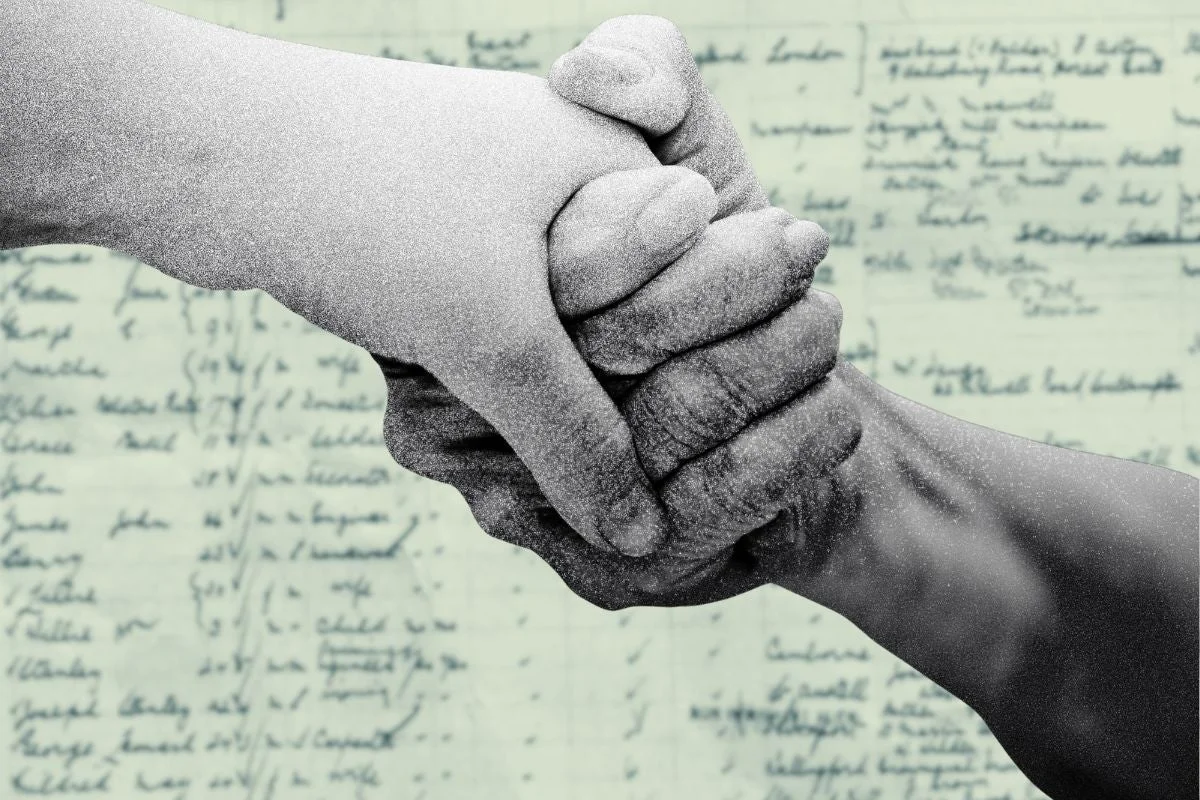
Werner Neuburger reached the United States at age three, traveling alone from Germany. Decades later, records assembled by his family showed that he hadn’t made the journey without help: an uncle kept searching for him, a family friend hid him, and a neighbor escorted him across the Atlantic. Each act was practical and personal, carried out amid a persecution that left Werner without his parents before he was three.
That history surfaced through family research rather than a single dramatic discovery. A passenger list gave a name to a remembered companion; archives and historians helped explain how the child came to be on the ship. The result is a story about survival, but also about how documents can recover the decisions behind a journey whose details were mostly lost within one family.
A passenger list opens a door
Werner rarely spoke to his child about his early years. Born in March 1936 in Binswangen, Bavaria, he lost his mother eight days later after Nazi persecution prevented her from receiving needed medical care. His father, Julius, was murdered in October 1938. Werner wasn’t yet three when both parents were gone, leaving his childhood shaped by loss before he could understand or describe it for himself.
After Werner’s death, his child inherited his genealogical research but postponed continuing it while working as a CEO. The material remained in the family, but the immediate demands of work kept the search from advancing. Then, during Hanukkah, the grandchildren gave their parent a passenger manifest from the ship that brought Werner to America in October 1939.
Werner’s name appeared beside Max Gradmann, a neighbor from Binswangen. Werner had said a neighbor accompanied him, but the manifest supplied the name that memory hadn’t preserved. A small entry in a passenger list turned a general recollection into a lead the family could investigate.
It also gave the search a direction. Immigration records, census documents and family connections helped fill gaps, though no single record could explain the whole chain of events. Yad Vashem, the Arolsen Archives and the Leo Baeck Institute provided further material, while German historians and archives surfaced documents that weren’t available online. The process depended on comparing sources and following connections across institutions and countries.
How Werner was kept alive
During Kristallnacht in November 1938, Werner’s uncle Max, who had become his main caretaker, was arrested and imprisoned in Dachau. A family friend took Werner to Cologne, where he was eventually concealed under an assumed name in a Catholic orphanage. That protection required more than finding a place for a child to stay: his identity had to be hidden while the danger around him continued.
Max was released after giving up his assets and promising to leave Germany. He then spent nearly a year in hiding as he searched for his nephew. The sequence matters. His release didn’t restore a safe life or end the threat; he had to continue searching under difficult conditions, with Werner’s whereabouts still uncertain.
When Max found Werner, he arranged for Max Gradmann to take the child to relatives in New York. The passenger manifest connects that final step to the earlier search, showing how an adult who lived nearby became part of Werner’s route out of Germany. The records clarified what had once been an unexplained escape. Werner’s survival depended on people who took risks and acted on his behalf, even though their help couldn’t undo the loss of his parents or remove the dangers surrounding them.
There’s no tidy version of that history. A child was protected through a series of choices made by people with limited power over events much larger than themselves. Still, the choices mattered.
The choices behind the records
Research also brought into focus the pressures facing families who had lived in Germany for generations. Leaving meant abandoning relatives, homes and livelihoods, and the decision could not be reduced to a simple calculation about safety. Staying meant facing persecution that grew more dangerous. For many, either path ended in tragedy, and the records of one family can’t stand in for every experience.
The family’s history points to a broader lesson about how the Holocaust unfolded: prejudice became acceptable, discrimination took institutional form, and more people chose to look away. Others stepped in, sometimes through modest actions whose significance wasn’t clear at the time. This is more significant than it looks: the neighbor’s role wasn’t a grand public gesture, but it helped carry a three-year-old to relatives who could care for him.
And this is the part most people overlook: records can show that a person traveled, or identify who was nearby, without capturing the fear or resolve behind the act. The documents establish a path; family testimony and careful research give that path meaning. If you’re working in this space, the distinction matters. A name in a manifest can open a door, but the next step is to check what other sources can support.
What the search leaves open
The search is still underway. Werner tried without success to find Max Gradmann, and his child now hopes to locate Gradmann’s descendants and tell them what his help meant to the family. That effort may not produce a complete account of Gradmann’s life or motives. It can still make clear that his actions became part of another family’s history.
Here’s the thing: family research doesn’t always end with a final answer. Sometimes it recovers names and relationships, while leaving other questions unresolved. In Werner’s case, the passenger list linked a remembered neighbor to a documented journey, and the wider search revealed the chain of help around that journey.
The names on the list led to a story of courage measured in practical choices—and to a reminder that their effects can last long after the people who made them are gone. A child reached safety because several people acted when they could. That legacy remains, even as the family continues looking for the descendants who may help complete the story.


Discussion
Sign in to join the discussion.