A low-prep Christmas tree activity lets toddlers practice scooping, counting and color sorting with muffin liners and small objects.
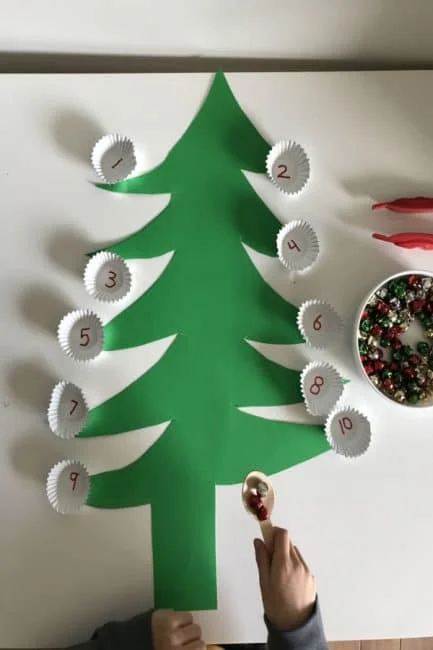
A holiday activity built around repetition
A simple transfer task gives toddlers room to practice coordination and concentration at their own pace. In this Christmas tree version, mini jingle bells add an audible cue: each scoop and drop produces a small ring, making the movement easier to notice and more engaging to repeat.
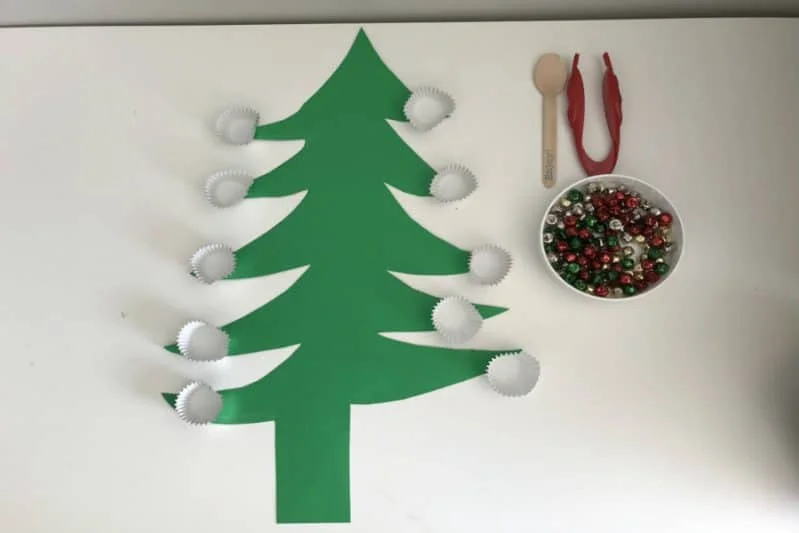
The setup is deliberately uncomplicated. Cut a tree shape from green construction paper or poster board and secure it to a flat surface, then place mini muffin liners at points across the tree. Regular-size liners work too if you make a larger version. The tree gives the activity a seasonal theme, while the liners create clear destinations for each transfer.
That structure matters. A child can focus on one small action at a time: pick up an item, move it, and release it into a target. The task doesn't need a single correct pace or a finished tree to be useful. Repetition is the point.
- Green construction paper or poster board
- Muffin liners
- Mini jingle bells
- A bowl and spoon for transferring
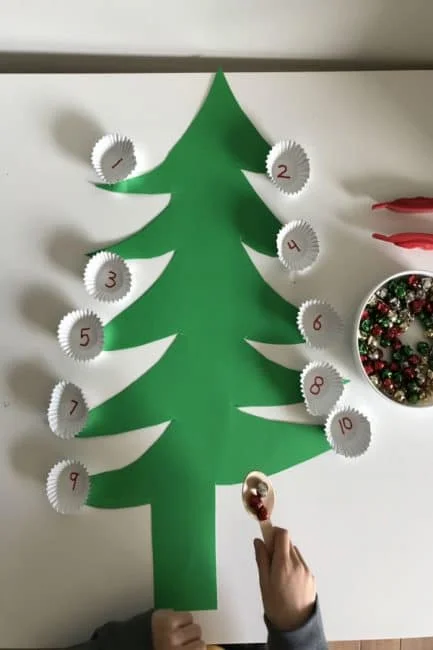
Let the child set the pace
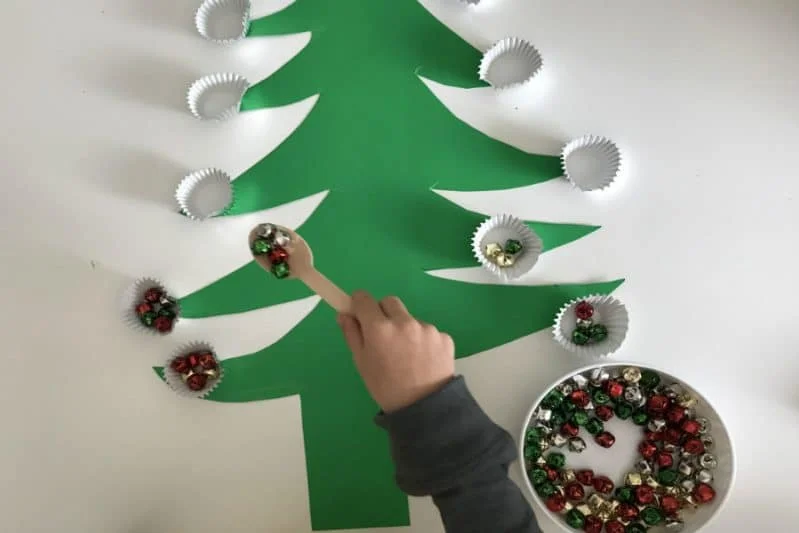
Invite your child to place the liners on the tree, then put the bells in a bowl with a spoon. The child can scoop bells into the liners, choosing how many to add. That choice keeps the activity open ended: some children may aim for one bell per cup, while others may fill a liner and move on. There's no need to turn every round into a lesson.
A spoon makes the task approachable, but it also leaves room for adjustment. For a harder grip challenge, offer large tweezers instead. The change asks for a different kind of control and may slow the transfer down, which gives the child time to concentrate on grasping and releasing. If the tool causes frustration, returning to the spoon is a reasonable way to keep the activity inviting.
The bells make each transfer audible, adding a sensory element to the repeated movement. That sound gives children immediate feedback when an item lands in a liner, although the activity doesn't depend on sound alone. Other household materials can work in their place, including colored rice, pom-poms, pasta or buttons. The material changes the feel and sound of the task, so the same basic setup can hold a child's interest across more than one session.
Add counting and color recognition
Once the basic activity feels familiar, use it to practice early number skills. Write a number beneath each liner and ask your child to transfer that many items into it. The child can count aloud, then move the pieces with a spoon. This links counting to a visible result: each cup becomes a small target with a number attached.
Keep the number of pieces manageable for your child and let them check their own work by counting what landed in the liner. The exercise can be repeated with different targets, but it doesn't need to become a test. A missed count is simply a chance to count again.
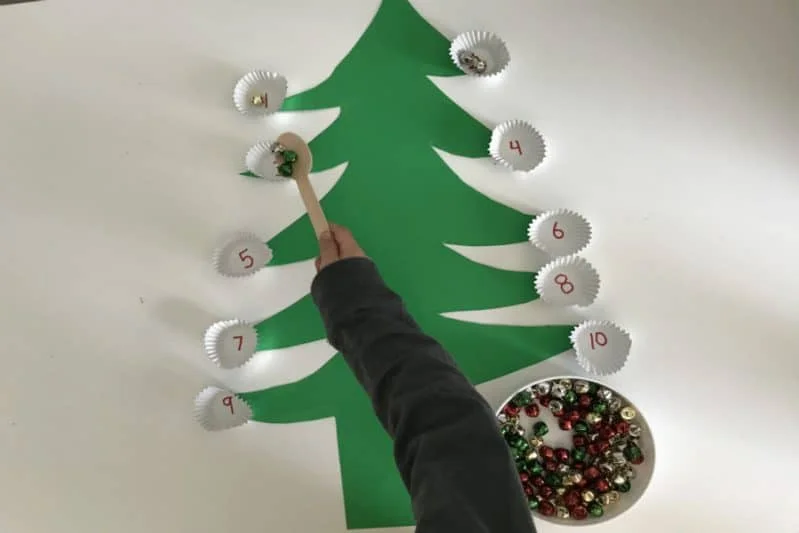
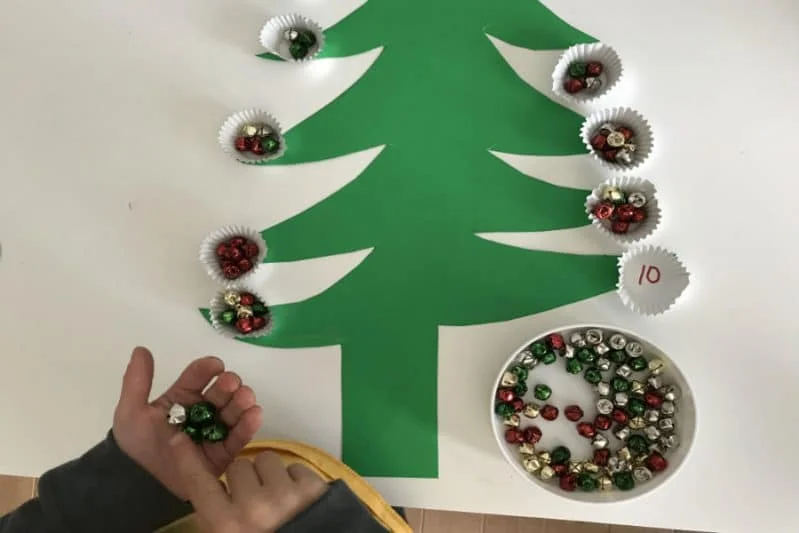
For color sorting, mark the bottom of each liner with a color and have your child match it to the items in the bowl. Colored pom-poms are a useful alternative to bells for this version. The child now has another decision to make before moving an item: which target matches its color?
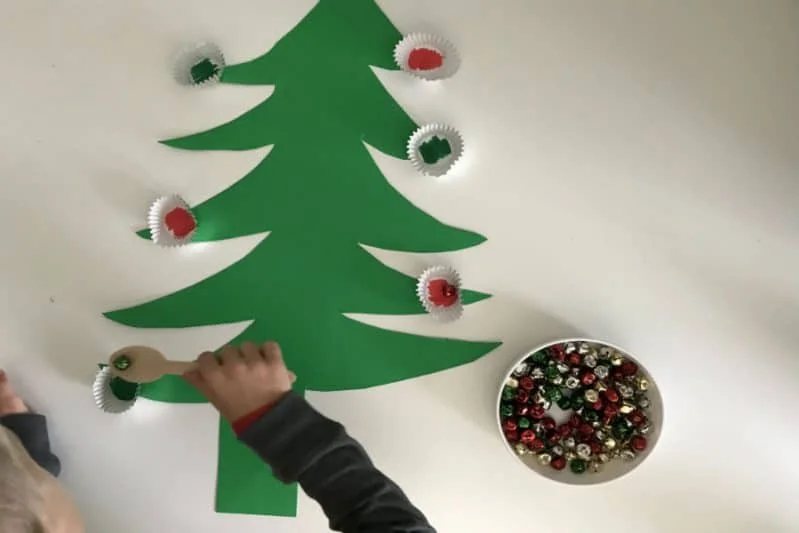
Small changes keep the activity useful
This is more significant than it looks: a familiar activity can support several kinds of practice without requiring a more elaborate setup. The child handles objects, aims for a target, listens for the bells, and may also count or sort. And this is the part most people overlook: changing one feature at a time makes it easier to see which version your child enjoys or finds challenging.
If you're working on an activity for a toddler, the flexible pace is a practical advantage. You can leave the tree available and let the child return to it when they choose. Some sessions may involve careful counting; others may be a few quick transfers. Both fit the activity.
The activity can stay available for children to return to when they choose. Its simple setup supports repeated practice, while small changes to the tools or targets add new challenges as their skills develop. Bells today. Pom-poms tomorrow.

Discussion
Sign in to join the discussion.